Animal BehaviorScience PolicyResearch Fundingmagnetic fieldsMagnetoreceptionQuantum Biology
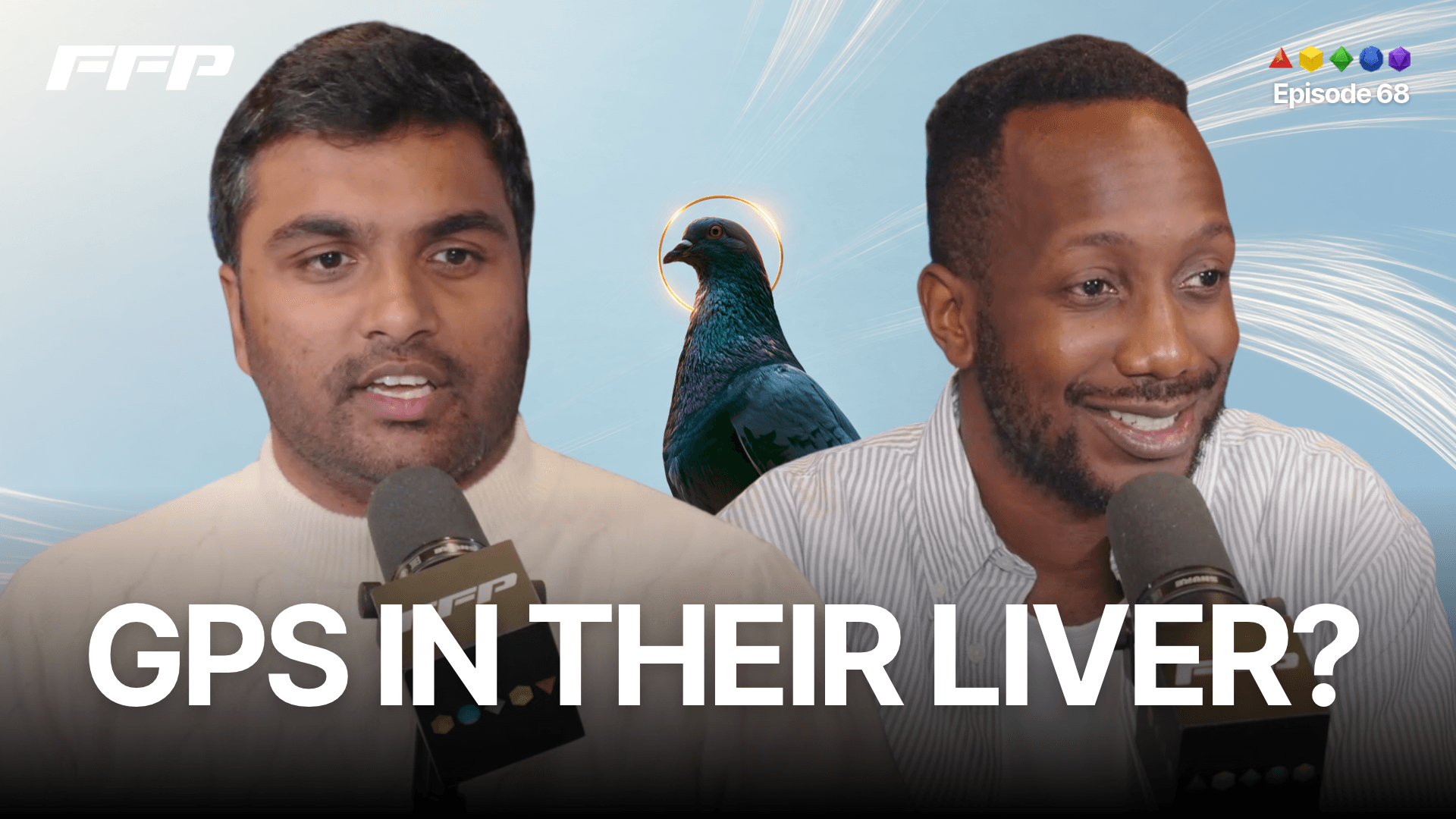
Do pigeons navigate with their livers? We unpack a surprising study, the scientific rebuttals, and what the midterms mean for research funding.
Do pigeons navigate with their livers? A surprising study proposes that iron-rich immune cells help homing pigeons sense Earth's magnetic field. But other researchers argue that the mechanism does not hold up. Lester Nare and Krishna Choudhary unpack the experiments, the physics and the scientific debate. Jump to 36:19 for the pigeon deep dive. We explore macrophages, magnetite, quantum biology, classic magnetic-coil experiments, and why changing an animal's behavior does not automatically prove how its compass works. First, we examine what the midterms mean for science: how Congress funds research, the difference between authorizing programs and appropriating money, and why committee assignments matter for NASA, the NSF, national labs and university research. What experiment would convince you that the liver really is part of a pigeon's compass? And what science stories should we cover before the end of the year? EDITORIAL NOTES The liver-based magnetic compass is a contested hypothesis, not an established explanation of pigeon navigation. We distinguish the study's observations from its proposed mechanism and discuss alternative explanations. Political context reflects our November 12, 2026 recording. On-screen clarifications: 09:20 The roughly $9 billion NASA science figure was a budget request, not an enacted appropriation. 29:59 Committee chairs represent the majority party; ranking members lead the minority on that committee. 32:29 Congress ended Superconducting Super Collider funding in 1993; President Clinton had urged continued funding. 44:04 The historical coil experiment was published in 1974 by Charles Walcott and Robert P. Green. 52:53 Mature mammalian red blood cells lack nuclei; bird red blood cells retain them. 54:30 The 2012 beak study challenged a specific proposed receptor, not every iron-based sensing mechanism. 1:03:39 Bats are not blind. 1:04:23 David Keays is affiliated with LMU Munich and the IMP in Vienna.
Transcript
Show →Hide16,913 words · auto-generated
Science funding and a compass in the liver?
0:00But the real sugar daddy for this is the federal government. And I know this is something in your own research that you're aware of and have experienced directly. 100%. That's really weird already, because first, why are these birds using their liver to navigate? Where are the haters? Where are the haters? The haters came out quick. The rebuttals are swift, OK?
Hello Internet
0:23Hello internet. This is your captain speaking, Lester Nare, joined as always by my co-host and our resident PhD, Krishna Choudhary. There is so much going on in the news right now. We are both returning back here in studio after some international travel. We're gonna cover 2 stories today, starting with a post-midterm election breakdown with a wave of new members coming into both the House and Senate next year. What will it mean for the ongoing battle as it relates to research funding and the mandate for federal agencies around deciding what US research and
1:06development looks like? And we will end with a deep dive on a research paper that was on the cover of Science Magazine earlier this year about how birds use their livers to navigate when they fly. There's also a lot of drama around this story, which we will touch on briefly, but as always, we are gonna talk about the science from the ground up today, because this is From first Principles.
What the midterms mean for science
1:46Hello, good sir, welcome back. Thank you. Thank you. Yeah, it's been, uh, America has changed- a little, hasn't it? I was in Australia actually watching the elections in real time, because over there, like, the mornings over there is around the evenings here. Mm-hmm. Right? And, and so the, the results were coming in while I was at my desk. It's pretty funny. So there's been so much discussion both about the elections, about other crazy stuff and nonsense happening in the US right now, the reason we wanted to briefly do a quick post-midterm elections breakdown is, uh, the decisions that are being made by those in Congress does impact the resources available
2:29to American scientists, uh, from university grants to our national lab- Mm-hmm ecosystem. And some of the people that are now heading to Washington, given this was a wave election, meaning there's a variety of new people that are taking place of incumbents, uh, and trying to take a look at their record for supporting the kind of research we talk a lot about on the show was gonna be a fruitful exercise, and it's also an opportunity just to kind of talk about how the work that we love and support actually gets done, which requires money- Yeah and funding.
How midterm elections work
3:05So before we get to the, the who, uh, is going to now be headed to Washington, DC, I wanted to briefly talk about what the midterms actually are right? Mm-hmm. So Congress is the part of government that- Uh, approves federal spending and passes laws, right? We have 3 branches of government, and within Congress there are 2 chambers, the House of Representatives and the Senate. Sometimes these get mixed up when people say Congress- Mm-hmm and the Senate. The Congress is both chambers. Yeah. And it's the House and Senate. Um, and Americans ele- elect members, uh, every 2 years. Uh, when those elections happen halfway through a 4year presidential term, it's a midterm.
3:45So all 435 voting seats in the House of Representatives are up for election every 2 years. Uh, senators serve 6year terms, uh, and those seats come up in 3 groups. So roughly a third were up for election in 2024- Mm-hmm A different third just, uh, had their election in 2026- Yep in the midterm, and then the remaining third will be up in 2028 alongside the next presidential election. And that's the good old, uh, pigeonhole principle, right? If you've got 100 things that 6 years, but every 2 years, so it's gotta be a third. Mm. Yeah. Very nice.
4:25So the, the members that were elected this November will be joining the 120th Congress in January. Um- Yep And that's when the work will continue, and together they'll make these decisions about federal spending and priorities for the next two years. And those spending decisions are going to matter for all the reasons we just discussed particularly as it relates to what we're interested in, which is fundamental research, also known as basic research, which is not very basic. This is work aimed at understanding how the world around us works, how cells function, how materials behave, how our stars form.
Why federal research funding matters
5:02Uh, the immediate goal is to gain knowledge, uh, even when we don't yet have a practical use for it, and in many cases this can take years- Mm-hmm even just to do that, those fundamental steps. And this requires researchers, equipment, facilities, um, all of which requires funding. So this is the connection between why we wanna talk about Congress as it relates to this show where we really focus on papers. And the last note I wanna make here is, uh, around the scale of federal funding as it relates to this basic research. According to the National Science Foundation's estimates in 2024, the federal government provided about 40% of the total funding for basic
5:43research in the US, more than any other funding sector. Uh, that picture changes a little bit when you look at research and development as a whole, um, which includes the broader categories of applied research and, um, which solves for practical problems, and development work, which is actually translating it into the end products. Private, the private sector provides about 75% of the funding for that larger, broader category, uh, and they do, put some significant money into basic research. But the real sugar daddy- Mm-hmm uh, for this is the federal government, and I know this is something in your own research that you're aware of and have experienced directly. 100%.
6:24I mean, um, when it comes to grants, the federal government, whether it's the NIH or the NSF, the DoD, these guys are the real bread providers, um, of a lot of the basic fundamental research that we know and love, that we cover on this show all the time. All of this is what contributes to all the scientific and technological progress, particularly in the US, that we've seen. And th- the research depending on this federal funding means who these people are going in to make these decisions matters, especially because currently there are ongoing battles around the scale of federal funding for basic research versus applied research, as well as the authorities on who
7:08gets to decide the mandates- Mm-hmm of the federal agencies, which have had historical ways in which the rules operated that are coming under challenge, uh, currently. So we're gonna sort of look at a few different ways to think about this issue. We're gonna talk about the who first with some of these new members coming in. Then we're gonna actually look briefly at what does Congress actually do, uh, as it relates to science funding, and how does that process, uh, occur?
Chris Pappas and research funding
7:37So our first, uh, member, uh, we're gonna discuss today is going to be Chris Pappas, a Democrat moving to the Senate, uh, for New Hampshire. He's a small business owner, uh, who's worked in his family's restaurant business and served in the House since 2019, so he's making the transition from the House to the Senate. during that time, he supported specific funding requests for 2 major agencies. So in April 2021, Pappas joined a bar- bipartisan group of House members to provide, uh, at least $10 billion to the National Science Foundation, or the NSF, for fiscal year 2022. Mm-hmm. Uh, the NSF specifically supports research across science and engineering,
8:20including work at universities, uh, where researchers are investigating some of these fundamental questions and training the next generation of scientists, which is a very important aspect, which in interviews we've done on the show, is something that almost every interviewee has brought up- Yeah in their own experience, and we've talked about in terms of your own lineage as you went through your own undergrad and postdoc programs. Yep. Yeah. I mean, you know, it's not very much appreciated that in order to actually do the research you have to pay people as well as like have the equipment and like buy the reagents and like pay for the telescope and all that other kind of stuff, right?
9:01It's not appreciated that, like, you need to pay for the personnel. However little. Grad students don't get paid a lot- but it still, it still amounts to a lot when you consider the amount of research that needs to be done, um, at the scale of the entire country. 100%. So that was, uh, the first thing he supported, Chris Pappas, uh, in 2021. Then in 2024, he signed another congressional request, this time seeking $9 billion for NASA's Science Mission Directorate for fiscal year 2025. So that's part of NASA's responsibility for the scientific investigations of Earth the Sun and our solar system in the wider universe. And that specific funding request was associated with expanded funding for
9:42two space telescopes, Hubble and Chandra. Uh, which, uh, the Hubble Space Telescope, as we can see here from this beautiful illustration, um, its goal is to observe visible light, ultraviolet light, and near-infrared light. And it's still going. And it's still going. Even though James Webb is up there, like, doing its thing, the, the Hubble team at the Space Telescope Institute is still churning out papers. Which is incredible. Yeah. And the other space telescope that was a part of this 2024 $9 billion appropriation was the Chandra X-ray Observatory. Detects, uh, X-rays, allowing us to investigate extremely hot gases, the remains of exploded stars, and matter heating up around black holes.
10:26The last piece from this bill was also the request supporting Dragonfly- Oh, yes Which is going to be sent to Saturn's moon Titan. And so, again, this is making the connection between money directly to these end products. So, you know, on the funding piece, Chris Pappas has a strong background, but he also backed research legislation in his votes. In June 2021, he voted for both the National Science Foundation for the Future Act and the Department of Energy Science for the Future Act, supporting expansion of the research programs in these agencies.
Melissa Bean and the national labs
11:02Our next up is Melissa Bean, uh, a Democrat returning to the House, uh, from Illinois. In February 2008, being joined a bipartisan group of Illinois representatives in submitting a statement to the House Budget Committee, they were seeking support for the Department of Energy's Office of Science, which funds those major research facilities, including Fermilab and Argonne National Lab- Yeah both of which are in Illinois. Yes. Um, and so obviously there's a personal reason, um, why she particularly leaned in on that issue. Uh, Fermilab specifically, uh, specializes in particle physics.
11:42Yeah, this is, this is where the, um, the last 2 quarks were discovered. The, the top quark, which is the most massive quark, was discovered in Fermilab. It's a, it's a legendary place that now is in dire needs of funding. I have some friends who work at Fermilab, and they were telling me that, like, you know, the funding constraints at Fermilab right now have gotten to the point where people need to take mandatory time off and things like that. And it's kind of going under the radar, but, like, everybody in the particle physics community and the physics community at large knows that, like, this laboratory, which is kind of a bastion, like a temple of American physics, is, is in dire need of funding.
12:22In addition to the discovery of the last 2 quarks, uh, research at Fermilab is widespread, but also includes studying- Yeah neutrinos and all of these fundamental particles that help scientists understand the underlying nature- Mm-hmm of reality, which, uh, has so many downstream implications. other in, uh, uh, lab institution in Illinois, uh, that she supported was Argonne, uh, which supports research across several fields. Uh, what's interesting is one of its major facilities is the Advanced Photon Source, which is, uh, which produces powerful X-ray beams, and they use them to study the structures and properties of biological molecules, as well as understanding how materials function.
13:04Mm-hmm. Um, and in part of her work she described, and this is literally what you were just talking about, uh, the consequences of inadequate funding. Oh yeah. There you go. At this time, uh, back in the day, Fermilab had to place employees on furlough. This was, uh, over a decade ago. Mm-hmm. And so, uh, this is a recurring issue because funding and appropriations happen on an annual cycle. Yeah. Sometimes it can be multi-year, but, you know, that's also, it gets complicated. Yeah yeah yeah. And Argonne was re- uh, forced to reduce its operation capacity of the Advanced Photon Source by 20% to 25%, which is, uh, not insignificant. So what this means is now this major scientific instrument that's given, uh,
13:45to researchers, you're decreasing the ability for science to access- Yeah one of our great tools. Um, so- And it's kind of a waste of money in the sense that, like, you've already paid so much to make this thing, this X-ray photon source, right? And now when there's just a lot of downtime, it's like, you know, what are we doing? So at that time, the delegation that Representative Bean was working with and leading, they asked to make room for at least $4.7 billion for the Office of Science in fiscal year 2009. And that request also supported expanding and making that research program
14:30broader in both of those lab institutions. So she's another one who's supported research legislation in her st- historical votes. Another interesting thing in her resume was in December of 2010, she voted for the final House agreement on America COMPETES Reauthorization Act. This was authorized support for research and science education specifically, including funding levels for the NSF, the same Department of Energy Office of Science, and the National Institute of Standards and Technology, or NIST. Now, this was authorizing the increased funding, which is a separate request
15:11than actually appropriating the funding, which we'll talk about in an upcoming segment. So she's returning with a strong history of support, uh, for some of these research institutions.
James Talarico and university research
15:23Our next up in the list, Democrat entering the Senate from Texas, James Talarico, or- Yeah also known as, uh, Talarico Talarico which I don't know if it had the intended effect. I, I, I li- I like him. I'm not gonna lie. I like James Talarico. He's, uh, a- I've been following him for a while, and, uh, this is a long time coming, so- Part of a- congratulations a new class of Democrats in the South. One example of his support was for the Texas University Fund, which created a lasting source of funding for, uh, university research. So in May 2023, Tallarico voted for two measures behind that fund.
16:07And Texas voters approved the constitutional measure that November, which resulted in an endowment worth approximately $3.9 1000000000. About $3 billion was new funding combined with money from an existing research fund. And an endowment works a little bit differently, uh, from a budget that gets spent in a single year. So the money invested in distributions can provide a variety of different financial support.
Scott Wiener and California research
16:34Our next up of new members entering Congress after the midterms is Scott Wiener, a Democrat entering the House from the great state of California. He's an attorney who has served in the California State Senate and who worked on legislation that created a new source of state funding that was specific, uh, for scientific research. Uh, the clearest example of this is Senate Bill 895, which Governor Newsom signed in September of 2026. Um, and that legislation puts a $7.5 billion research bond, uh, before
17:16California voters in March of 2028. So now what's the difference between a research bond and the endowment that James Talarico put with the University of Texas system? So a bond allows the state to borrow money and then repay it over time, rather than- Okay the money already existing in a pool- Yeah whether it's through donations or through tax revenue, and then distributing it. So in this case, the proposed borrowing, incurring debt, would support specifically scientific research across the UC system. So while this has been, this legislation has been signed, the $7.5 billion has not yet been approved by- Okay
17:58the voters. Now, we do have 2 Republicans moving from the House to the Senate- Mm that have also, uh, s- have specific examples of supporting research alongside votes against some of the legislation we discussed.
Andy Barr and Julia Letlow
18:13The first of the two is Andy Barr of Kentucky who will be succeeding Mitch McConnell's Senate seat which he's held for a very, very long time. And Andy Barr, who's coming in, in terms of his history as it relates to supporting science, signed the April 2021 request for at least $10 billion for the NSF. Okay. in fiscal year 2022. He also voted for both the NSF and Department of Energy research bills but was opposed to the CHIPS and Science Act in 2022. Okay. The other Republican entering the Senate in this cycle is Julia Letlow of
18:57Louisiana who has supported a specific university research project alongside her Senate colleague Bill Cassidy, who's also a Republican. She was the congressional requester for $3.5 million for semiconductor research and workforce development at Louisiana Tech that was included in Fiscal Year 2024 Appropriations Package. However, she has a mixed voting record historically where she, uh, voted for the Department of Energy Research bill in 2021, but against the NF, uh, the NSF bill as well as the CHIPS- Okay and Science Act. So a little bit of a mixed bag for both Republicans who are going to be
19:39making their way into the Senate. So these are some of the people- Mm-hmm that are going to be entering the new 120th Congress in January with some record of supporting science research either at the state and/or the federal level. And so the, some of their past action can s- can give us a sense of their priorities.
What Congress can actually do
20:01Now let's look at what can they actually do in the House and Senate that shapes research funding for the work of scientific institutions. Congress has 3 main jobs: authorization, appropriations, and oversight. first, authorization establishes what agencies and programs are supposed to do. They can initiate a research initiative, they can change an agency's responsibility, and they can set out funding levels for that work. But authorizing a funding level doesn't commit Congress to providing that
20:43money. So you can authorize $10 billion for the NSF, but you still need to separately actually ca- like write the check, and these can happen in 2 separate steps. So that actual process of giving the money happens through appropriations. While the provided money a- which is the provided money agencies can actually spend. So you have a use case, like I just mentioned, where you can authorize $10 billion for a research program and then only appropriate 6 Mm or nothing at all. Well. And the Chips and Science Act gives us an example of that distinction. The law provided appropriations, actual money, for the semiconductor in-
21:23industry, but only authorized a broader research expansion for the federal science programs. So when we hear that Congress has authorized billions for research- Yeah we still need to ask how much money it actually has appropriated, um- Okay for a university team for applying for an NSF grant, like we've talked about, uh, those are decisions that help them understand what programs are available and how much research the agency can support, which then dictates the type of work that they do. Um, what's interesting is, you know, Congress authorizes these agencies on what their mandate is, but they generally don't review an individual team's proposal.
22:05That happens through the agency with input from expert reviewers and program staff. Although, there is currently an ongoing battle that is trying to change that paradigm that would then allow political appointees- Right to have individual input and control over- how a large bundle of money that's appropriated for an agency is individually granted to specific programs, which is a massive departure from how this has historically been done. Yeah, and I mean, before historically, the peer reviewers, which were other scientists and other experts in the field of whatever grant proposal was
22:47being deliberated on, they would have some kind of final say, right, on, like You know, uh, because presumably the experts are the ones in charge and know what type of scientific question is worth the money and what is not. And what you're saying here is that, like, in, in very recent times, within the last ad- administration actually, so probably within the last 2 years- Y- yes, and especially this year in particular. Yeah. So this year in particular, just before the midterms, the Trump administration put out, like, a type of memo. Right, which, which, which is how they wanted the White House Office of Management and Budget- Yeah to change how they administered grant funding- Yeah
23:31among other things. Yeah, and this, this is what you mean by the contamination of political activities into fundamental science grants and funding. And it also touches on the tension between the authorities of the legislative branch- Yeah Congress, who has the power of the purse- Mm-hmm versus the executive branch, which is meant to faithfully execute the laws- Right passed by Congress. And part of what the executive branch is trying to do is say, "We get to decide the national priorities of the country at any given time, which means that we as the administ- administrators of the money, uh, should have more
24:12at the political level versus the agency level control over what happens." Yeah. Uh, which is in part, uh, overriding the constitutional authority of the Congress in appropriating the money that the, and what that money should be spent for in terms of the government responsibility. So there's a constitutional issue here, and there's also just some operational day-to-day aspects- Yeah of, of this battle, which is why the midterms kind of mattered as it related to upcoming budget votes over the next 2, 4, 6 year- Yeah cycle. And so we've talked about how Congress, 2 of the 3 aspects of how Congress
24:55wields that power, authori- authorizations and appropriations. What are the 8 federal agencies and their mandates? And here's the money for them to go do that job. Their third tool is oversight, which is then saying, looking at and examining how are these agencies executing on their mandate with the money that they were given to do that mandate. This is something that people see all the time on TV, which is these hearings, as an example, where they'll- Mm-hmm bring in leaders from different federal agencies. Federal agencies span well beyond the scientific agencies we've talked about. This will be the Pentagon. This can be, uh, different finance-related agencies.
25:36There's It's a massive labyrinth. Um, but the focus here is so that members can ask in the context of science research programs, uh, why a research program has changed, how grants are being awarded, whether an agency is following the law, and that would then inform future upcoming- Mm-hmm legislation that might impact that agency. Now, that's for both the House and the Senate. The Senate has also an additional role in deciding who leads these institutions. For positions that require Senate confirmation, which can be the leaders of some of these federal agencies, the president nominates somebody and then
26:17senators decide whether to approve that appointment of who is going to be head of X agency. Uh, an example is, um, uh, the new gentleman at NASA- Yeah Who had gone through this process? So, these are the responsibilities that Congress operates alongside the executive branch. And for supporting science for the members we talked about that will be joining, that can mean a variety of concrete things, right? Helping establish research programs, securing the funding for it, and then holding leadership accountable for how it operates given the amount of new political influence that's happening, uh, in these agencies.
27:00So we've talked about the who, we've talked about the what, what can members of Congress do that impact basic science research? Now I just wanna briefly touch on the how. Um, so how does this detailed work actually happen? Congress divides much of all these groupings of people into committees, which are smaller groups of members of the House or members of the Senate who focus on particular subjects. Within those committees of jurisdiction, there can also be subcommittees that take responsibility for even narrow areas. Mm-hmm. These groups examine proposals, hear from agency leaders, and work on the legislation before it gets to a full-floor Senate or House vote, which is
27:43what's required for it to then become law.
Committees, appropriations and oversight
27:46So for science, it helps to distinguish the committees that shape research policy because sometimes when people talk about the House or the Senate, the image can just be, oh, it's, you know, 100 or 400 plus people all in a room arguing about anything and anything at any given time. Um, and it's a little bit more narrow than that. So in the House, the Science, Space, and Technology Committee has the responsibility for civilian research. That includes the NSF, NASA, and the National Institute of Standards and Technology NIST. Yep. Which NIST works on measurement and standards for all bunch of technology. Mm-hmm. The committee also covers Department of Energy research and laboratories.
28:28In the Senate, those responsibilities are divided differently. The Commerce, Science and Transportation Committee covers agencies including the NSF, NASA, and NIST. The Energy and Natural Resource Committee has responsibilities involving the Department of Energy, science, and national laboratories. These committees can work on, you know, all of these research programs, uh, and how these agencies carry them out. Now, that's on some of the authorization aspects. For appropriations, the funding bills go through appropriations committees. And there, there's an appropriations committee in both the House and the Senate, each of which are divided into subcommittees covering different
29:12parts of federal spending. And so these appropriations committees, they're the ones that actually decide where the money is going. They're, when you say secure the bag- Yeah you want someone on an appropriations committee. Okay, so, like, the appropriations committee is, like, one of the most important and powerful committees in DC. And it's a highly lucrative position to wanna be in. You wanna be on the ap- appropriations committee. Yeah okay. Um, that's absolutely right. In both chambers, funding for NSF-NASA and NIST go through the Commerce, Justice, Science, and Related Agencies subcommittee. Department of Energy science funding goes through the Energy and Water Development subcommittee. Uh, so for an agency like the NSF, there are multiple groups that have a
29:55role- Yeah On all of these aspects for this. So this is why when you hear these ongoing battles about party leadership or, uh, committee leadership, the- each party will have, if it's the party with the majority, the, uh, majority leader or, uh, ranking member, and then you'll have the minority leader, uh, f- who drive the priorities and the process for what gets discussed at that first stage before we get to a full floor vote. Mm-hmm. So those leadership positions in these committees and subcommittees are a
30:37big driver for what gets oxygen when it comes to ultimately the decisions around authorization and appropriations happening. So as the new Congress gets underway, we will be watching how a new swath of members in the House and Senators change the dynamics of the discussions that are happening in these committees as it relates to where does the future of, uh, basic applied and development, uh, science go in terms of congressional priorities, especially when we have huge financial tensions in the US right now that consumers and the American
31:23people are personally feeling. That's right. There's issues around how corporations, which are also drivers of research and development funding, are spending money, and that needing, wanting to be a priority for the American public. And so are science research appropriations, in what is potentially the beginning of an er- era of austerity, are they gonna be able to get oxygen- Yeah uh, with so many other competing issues? Yeah. I think that's Y- you bring up a good point. It is It's not trivial that just because we have Democrats in charge, science funding is going to go up.
32:03And so, um, science is a bipartisan effort. Historically. Historically. But what that means is it's bipartisan support and also bipartisan, um, not support. I don't know what the word is. But like, you know, like, for example, Ronald Reagan was the one who tried to fund the superconducting super collider in Texas. Bill Clinton, a Democrat, is the one who stopped the funding, right? Um, and sure, you could say that's 30, 40 years ago. Well, you know, um, the nuance is still there. And, um, it's, it's gonna come down to, like, what are the priorities, as
32:45you said. I mean, a big thing that's out there right now is healthcare for all, which is, which is, I think, a great thing. But, like, at the same time, um, does healthcare for all also mean heightened funding for fundamental science that will make healthcare cheaper and better in the future? That's not so trivial. And it's a little bit nuanced because if you're gonna look at this sort of, uh, Medicare for all, healthcare for all, Trump Care for all, whatever your label is for it- Yeah, yeah, yeah um, a big part of that conversation is we don't have the money to pay for it. We're not gonna litigate that argument- Right 'cause I think there's details there. Yeah yeah. That's not for this podcast. But I think your point is important, which is part of what funding the basic
33:26research in science could do is actually lower the cost- Yeah that's not going to be a part of the discussion, if I were a betting man. Exactly. It's not gonna be how it's viewed- Yeah, yeah uh, because it's already viewed as such an expensive thing to accomplish. Yeah yeah yeah. And so th- there are real nuances here. And so as we go into, um, season 3 next year, one of the things I'm looking forward to doing, building on the work that we've been able to get educated on and implement from, uh, AAAS, is funding historical data sets- Yeah and tracking, which you can check out on our website at ffp.com, is more closely looking at the legislative and appropriations process, because we
34:09know many of you as listeners are researchers- Mm-hmm are postdocs, and are being impacted by the yo-yo nature- Mm of this process. And it's a little bit, it's not as covered on other major networks in terms of what's actually happening. Yeah. So, you know, hopefully we can, um, provide some more clarity there as we move forward. And this was a good starting point to create a baseline of what are, what, what is actually happening- Yeah and what are we talking about? And the midterm craziness gave us an opportunity to talk some policy from First Principles. So, with that, we are going to take a quick, quick, shill break, mmmhmm. because we gotta keep the lights on on the pod.
34:52So for those of you joining us for the first time, welcome to the best science show on the planet. The 2 of us here run this as a love letter to the research community. The best way you can support the show is with a like, share, a comment, bring it to Journal Club. Uh, also, uh, if you are listening to the podcast, a 5star on Spotify or Apple is greatly helpful in us reaching more people. For those of you who are Apple Podcast listeners, congratulations, you now have video. Woo. After months of back and forth, a video is now available on any podcast
35:33platform that enables it, including Apple Podcasts. We do, we did see some transition issues for our Spotify listeners for a few hours in the day we made the transition over. So, uh, if you are a Spotify listener, videos are available and back, and it's one of the best ways to watch the show because as we will see in our upcoming deep dive, we, uh, like to look at figures and visualize some of these deeply complex topics. And with that, we are going to transition into our deep dive for today, which is going to be about a controversial research paper on the cover of
36:13Science about how birds use their livers to navigate while flying.
Do pigeons navigate with their livers?
36:19So I first encountered this story because it was on the cover of Science, the journal Science, in May 2026, and it piqued my interest because the headline is there on the cover. It's very weird. It says, "Liver macrophages guide pigeons on cloudy days." That's really weird already because first, why are these birds using their liver to navigate, right? Um, navigation means sensory stuff, like you gotta, like, look where you're going and figure out where you're going. That means the senses, which is usually in the head for birds and mammals and things like that, and also it's a brain thing, okay? The liver is nowhere- in the calculation for me when people say sensory mechanisms.
37:03The other, when you look at the story in great detail, you, you go into the story and the authors are claiming that the liver in these pigeons is sensitive to the earth's magnetic field. That's not on the cover. Okay? But the, the magnetic field part is there on the Max Planck website, the Max Planck Institute for Animal Behavior, and that is absolutely wild. Yeah. Why is the liver sensitive to a magnetic field, and it can sense the earth's magnetic field, which is an extremely weak magnetic field, by the way. And, um, I mean, I had heard about magnetoreception before, which is the idea of, you know, animals being receptive to the earth's magnetic field and using that to navigate, but not in the liver.
37:45That, that's weird. The story came out in May, and I was tempted to do a whole episode on it, right when it came out in May. I mean, it was on the cover of Science and everything. It was all over the news, and at the same time, my skepticism was also triggered because I was like- I hadn't even read the paper- but I'm like, "The liver and the earth's magnetic field, there's a lot going on." I'm- I don't know enough about this, but I know enough to be like, "I'm gonna wait it out." "I don't believe you." I don't, yeah. It's like, it's like maybe, yeah. Like, I'm gonna wait it out and see what people say. And Science is also one of these journals that doesn't, um, publish peer review. Ah. Right? So I can't like, like in nature, I can't like go in and see all the, you
38:25know- The back and forth all the back and forth between the reviewers to see what happened. So I, I really wanted to give it some more time, and the wider community delivered because since its publication, there has been a lot of press and there has also been a lot of clap backs from other scientists in the field. So I'm glad I waited. We love a clap back. Yeah. There's been a lot. Um, in this segment, I wanna talk about this story in some detail because first of all, magnetoreception is, is amazing, right? The idea that you can even sense the earth's magnetic field reliably is kinda crazy. And second, it's a great reminder of how dynamic cutting edge science is. We've done stories like this in the past.
39:06The favorite one is probably the hexagonal diamond story, where you had this back and forth, you had all of this lore of people saying it's not possible, then someone's actually made it. All of the back and forth between the reviewers to actually get it right. In this case, we don't have reviewers, but we do have rebuttals. Um, so it's, it's gonna be kind of a wild ride. So first, let's go over some history, as always. This actually dates back to the time of ancient Egypt and Greece. This is, uh, you know, usually when we say let's go through some history, it's like the past 200 years. Now we're going, like, 4,000 years, okay? Going in the way back machine. Way back, um, the Epic of Gilgamesh.
39:48This is the great Sumerian epic, the first, like, big work of fiction that humanity is known for. The Epic of Gilgamesh, it's a story that involves a great flood, and during that, there's a dove that is used to see if the flood is over. So the dud- dove would, like, go out and scout it out, and then come back to the boat or whatever. This is the same motif that is then used later on in the, um, story of Noah in the Bible, where the story goes that Noah sent out a pigeon to check if the flood was over, and when the pigeon came back with a branch of an olive tree, Noah knew that the flood waters were residing and, you know, he could post up somewhere.
40:30Pigeons then became used for navigation, because it turns out, you know, they can go out and come back to their home. So, ancient Rome, in its heyday, had something like 5,000 pigeons. The ancient Greeks actually used carrier pigeons to release the results of the Olympic Games- Oh, we love that back in the day, and send messages during battle. And obviously, you also have Hannibal and Genghis Khan. These guys all used pigeons to relay messages from one to another. All the- You know who else used pigeons? Who? Pigeon Man from Hey Arnold!, the classic Nickelodeon cartoon. Oh dude. Who was the- Yes man who had all the pigeons.
41:11Uh, you know, and Arnold befriended- Yeah and it was complicated. But it just made me think of, you know me with my classic '90s references. Um- That's a good one Pigeon Man, along with Genghis Khan and Hannibal. Yeah. Users of pigeons for, uh, communication and navigation. Exactly. All the way into the modern era, in fact. World War I, homing pigeons were used extensively in battle because they were so reliable. And this is before the 2way radios and the long distance sort of radio frequency communication of World War II. But back then, the homing pigeons were so reliable because they, they had this uncanny ability to fly back from unknown territory. They were carried in tanks, in ships, in sea planes.
41:53They were pretty ubiquitous. And what was miraculous was you could displace them hundreds of kilometers into unfamiliar territory, and they would find their way back. Okay? How did they even do this? I'm very curious. It's, it's really, it's really quite strange- Yeah and quite miraculous, right? Now, from all of the research that we've done, we've done, we definitely know that it's multi-sensory, right? It involves visual landmarks, probably some type of smell, like olfactory maps. But also, they can do this in windy days, so the olfaction kind of goes away. There's no smell on windy days- Mm 'cause you don't know where the smell- Yeah
42:34is coming from. And they can do it on cloudy days, so they can't tell where the sun is. At that point, they probably use mag- the magnetic field of the earth. This is called magnetoreception, and it serves as a kind of 6th sense. It's the same way that, you know, Boy Scouts use the compass to tell which way is north, and then from there, maybe you can tell on a map where, where you need to h- head to. The central biology mystery here is there's a widespread consensus, right, that migratory species sense the earth's magnetic field. Fine. But how? How does that actually happen, right? Like, what is the- How, Sway? Yeah, like, what, what is the anatomical location?
43:16And, um, what is the biophysical mechanism? There's some biology happening, but it's clearly also a giant physics problem in some sense, because you're trying to sense a magnetic field that is extremely tiny. And that is where this latest paper sort of fits in, okay? So, there's a rich scientific history about just investigating magnetoreception in the first place, and it's gonna be important, because a lot of these players are gonna come in in the end, okay? So, it's important to understand how we even got to this spot.
The classic magnetic-coil experiment
43:51The modern scientific hunt for the biological compass probably, you'll say it begins in the 1960s and the 1970s with behavioral biologists William Keeton and Charles Walcott. These guys from the University of Frankfurt, they published this paper, and it establishes that these birds are indeed using the magnetic field. So this is the paper that, like, shows once and for all definitely they are using the magnetic field. Now, it's not showing how, but it's saying certainly it is, okay? Here's the, here's the experiment that they do. They design a tiny battery-operated Helmholtz coil, which is just, like, 2 tiny solenoids. Mm-hmm. And these, these solenoids have parallel wire loops that can create a nearly
44:36uniform magnetic field in between them And you can strap this to the heads of pigeons- Mm-hmm and give them a fake magnetic field, right? You can, you can s- back then, in 1960s and '70s, battery technology was just good enough where you could power this thing, have it kind of remote on a pigeon, and then have the pigeon fly, turn it on and off wirelessly, and you can see how that affects navigation. That's clever. Right? And the result was, was pretty stark. When they released these coil-wearing pigeons on sunny days, the birds flew home perfectly, whether this thing was on or off. On cloudy days, if it was off, they would fly home perfectly.
45:17But if it was on, that fake magnetic field would overpower the Earth's magnetic field, and they would just, like, start scattering around randomly. Right? So this is the dual navigation paradigm that is established in this paper. It means that, you know, birds use the sun when they can see it, but when they can't see it, they switch to these specialized backup magnetic compasses that they have somewhere in their body. That's such a good setup because it, it immediately establishes- Yeah this context. It's a beautiful, simple experiment, right? Very, very well done. Because it's like, uh, I mean, the, the thing being on or off, that doesn't
45:57change the mass of the, of the apparatus, right? So you can't say like, "Oh, when it's on, like, it's heavier." It's really not, right? You're just cycling current through the thing. On sunny days, it doesn't matter if it's on or off. It's only on cloudy days that it matters if it's on or off. And if it's on, the local magnetic field is just messing with the global magnetic field. And intuitively, i- y- very simply, you can see that, okay, this- Yeah this makes sense. Yeah exactly. And, you know, there are challenges in studying, now the question being- The- wh- wh- what's going on? Where is it, right? Um, with magnetoreception, you're trying to sense the Earth's magnetic field. This is a sense that is very different from the other senses.
46:40For example, with light, light does not go through my body. I need a specialized sensor like my eye that is mostly transparent, right? Because then the photons can go through. They'll go through my eye. They'll go through the, um, the, you know, the, the, the Jell-O in between my lens and the retina, and clearly the retina has some photoreceptors that will sense the photons. I don't have eyes all over my body. That would be a little weird. That would be a little weird because, well, it would also be useless because none of the photons would, like, get through. There's no eyes inside my body. Because there's, it's dark inside my body, right? The eyes sort of stop at my skin. Or the, the photons- Stop
47:21Stop it, my skin, right? Similarly to sound, you need like, again, the skin is like a high impedance sound barrier. If I, if I'm talking into my hand and I put a microphone at the center of my hand, you're gonna get very muffled noise. Mm-hmm mm-hmm. Because the sound is gonna the, the s- the skin, it's gonna hit the bone, it's gonna hit all this sort of stuff, and get bent and, and get diminished. That's why our ear canal is just a giant hole- It's like- that funnels the sound in into an eardrum that is sort of our sensor. The, uh, part of the point you're bringing up here is we have specialized tools- Mm-hmm to receive the type of signal- Yeah that can actually make it functional. Yeah. And it's, like, kinda obvious where it is.
48:03Yeah. Because of the physics of the thing you are trying to sense. That makes sense. The magnetic field is different- Mm because the magnetic field penetrates, okay? You put a magnetometer inside, and it will sense the Earth's magnetic field just as well as if you put a magnetometer- Mm on the surface of my skin. You see what I'm saying? Yes. So the organ to sense the magnetic field could be literally anywhere. Whi- which is uniquely different than photons and sound, for the reasons we just discussed. Exactly right? The physics is different, which means that, like, uh, in, in some sense, you have a bit more freedom- Yeah, right in, in putting the organ wherever you kinda want. It could be anywhere. Right? Which is kind of the idea here, where it's like, oh, it could be in the
48:43liver. Well maybe. Yeah, it could be. Maybe. Yeah. Uh, so, so let's see. What are, what are the hypotheses before we get to the liver, right? Yes. What are the, what are the big hypotheses? The first one that people c- came up with is kind of a nice classical explanation. They said, "Okay, look at, look at a compass," right? A compass responds to the aggregate magnetic field by just, like, there's, like, a torque on the thing because, like, it's Th- there's a, there's a tiny magnet on the compass itself, and that magnet wants to align with the Earth's magnetic field. So, you get a little torque and the compass begins to align with whatever the magnetic field lines are over there. So, what if you had something like a compass in these animals? You had a little thingy that was tiny bit magnetic- Yep
49:26and it would start rotating with the Earth's magnetic field, and it would cause these forces, and if I could sense those forces, then I could sense which way the magnetic field is. A- and that's, and that's the first hypothesis. It's c- it's called a magnetite hypothesis. Now, it's, it was known that there were certain bacteria that navigate using chains of magnetite, which is basically, um, iron, oxygen, iron, oxygen. The iron is the thing that is ferromagnetic. And so that thing is, um, you know, it's naturally occurring as a ferromagnetic m- mineral, and the logic is that, like, if the bacteria can do it- Mm-hmm right, then surely birds can do it, right? Um, birds are a higher evolved form.
50:08Fair. So it kind of makes sense. And the bacteria in this sense, they're not actually sensing the magnetic field. What they're doing is using these crystals that move around and exert forces. They sense those forces to tell which way the magnetic field is, right? So it's, it's a kind of indirect- Sure sensor in some sense. But at the s- at the same time, I mean, they are in fact just, like, straight up, they know which way the magnetic field is- by looking at this thing, right? Now, anatomical studies reported finding bilateral patches of magnetite-rich nerve endings in the upper beak of birds, okay?
50:50So, this is the paper that came out, and it showed that it works in total darkness right? You can have these anatomical receptors, you can have these magnetite patches on your beak, and then if you orient with the magnetic field, you're gonna feel a little tingle, and if you orient perpendicular to the magnetic field, you're gonna feel the opposite type of tingle, right? That, that feels very reasonable. Feels right, yeah. It feels right. It's nice. It's classical. The, the location on the beak, too, it's like, you know, the, it's- Yeah it's where the, the sort, distance to the brain, where it's- Yeah being processed thing, and it's, it's where they're go It seems sensory, right? It's like- Yeah. All of our stuff's around here Yeah, yeah, yeah.
51:31Here it's like, it's like, it makes sense, right? And it, it's kind of an intuitive model for a physicist. Uh, it's the same thing as a compass. You have a compass on your beak, and you just, like, sort of orient this way and figure out which way it is. And it's widely accepted- until 2012. Ooh. 2012, it's always a Nature paper. In this case, it's a letter from Nature. Okay. Um, this is by David Keays. He publishes this particular paper. Great name. Uh, look at the end. Uh, the clusters of iron-rich cells in the upper beak of pigeons are macrophages, not magnetosensitive neurons. Mm-hmm. Okay? Just straight up not what you thought it was. Eh.
52:11Okay? Macrophages are these, um, you know, they're parts of the immune system that are kinda like the trash collectors- Mm-hmm of the immune system. They're the Pac-Man cells that just, like, eat up, eat up debris and all sorts of stuff. And what they found kind of shattered the consensus, because what they found was that the same beak strips of magnetite material that was previously thought to be these neurons that would sense the magnetic field, no, it turns out it was just these particular immune cells. The reason why they are magnetically sensitive is because they have a lot of iron, but the reason why they have a lot of iron is because that's kind of the job of a macrophage.
52:51You eat up all of the dead red blood cells.
Macrophages, iron and red blood cells
52:53Red blood cells don't actually live all that long because red blood cells don't have nuclei, right? The cell nucleus is gone as they squeeze out of the bone marrow. And so they only last for, like, on, I think, uh, for, for human beings it's on the order of, like, months. Um, maybe even less. Once those red blood cells die, they have a bunch of hemoglobin in them- Yep which is a lot of iron. These macrophages, when they eat that, they're gonna accumulate a bunch of iron. And so, yeah. That, it, there's, it's so good because this is why I love science. The clap backs are so- Yeah you can't, uh, debate that. Yeah yeah. And, and, and I mean, he, he shows with multiple, um, staining techniques
53:38that these iron-rich deposits are macrophages. They're not neurons. So, the immune system becoming a sensory thing. Harder leap than the- Harder leap the initial construction, which was clean and felt easy. Yeah exactly. And at the time, you know, neurobiologists considered these macrophages to just be the immune system's garbage trucks. They're incapable of the kind of rapid organized sensory signaling to the brain that is required to sense things and navigate with that sensation, right? We're going to come back to this because, if you remember the title of this paper, I do. that we are referring to, is about macrophages. So, it is kind of a nice, like, full circle that, are we, are we, are we
54:21coming back to- The- macrophages being important? It, it, it was a clap back, but it might be a clap back back. But stay tuned. But stay tuned. Let's see. So clearly the magnetite hypothesis is not really going to work, right?
The radical-pair hypothesis
54:33They're in fact macrophages, they're not neurons. Um, classical mechanics and classical electrodynamics might not be everything. So what do you do? You invoke quantum. Qu- the quantum. Yeah yeah. So they went Marvel with this. Okay. And the, the, the original idea was actually proposed in 1978 by a physicist, Klaus Schulten. The idea is to use radical pair quantum mechanism. We're gonna target a specific protein that is found in the eye, in the retina of these birds. It's called cryptochrome 4A.
55:14Here's how it actually works. So you've got this protein, cryptochrome 4A, and it's going to house a molecule called FAD, which is flavin adenine dinucleotide. This is a ubiquitous molecule that is found all over cellular metabolism. It's part of, um, the cellular respiration cycle in the mitochondria, all sorts of stuff. Um, it's found everywhere. It's kind of like a analog of ATP in some sense because it can store energy and then, and then give it back and things like that. Here's what's gonna happen. A blue light photon is going to enter the bird's eye, and it is going to
55:54excite an electron in this FAD cofactor, this light-absorbing cofactor. This photon strike is going to initiate a cascade of electron transfers. The electron's gonna bum, bum, bum, move around, and the process is going to result in a radical pair, which is 2 molecules, the FADH+, and the O2 molecule. Those 2 are gonna each possess a single unpaired electron that's gonna be separated by some physical difference. It's gonna be separated by some physical distance because these are 2 separate molecules, obviously. But here's the thing. They're bound by a shared origin. That's interesting. Right? Yeah. We have seen this before in our quantum mechanics discussions.
56:37Yep yep. Uh- This is an entangled pair of particles. Which is so But it's super radical. It's radical in the sense that the, these are like, uh, radical pairs in chemistry, is what they call it. But in this case, the idea is if I can make the entanglement live on for a while- Yeah I can use that to then sense the magnetic field. That is the idea. And so here's what's happening. These 2 electrons, they're created simultaneously from the same chemical bond. This is good. And now their quantum spins are entangled. Yeah. You've got your Alice and Bob experiment again. But instead in, of like 2 people with little polarizing filters- your Alice and Bob are 2 molecules that each have an electron.
57:20They can exist in 2 distinct states. They can ex- exist in the singlet state or the triplet state. Calling back to our, uh, quantum computing episode, where the singlet and the triplet were the zero and the one of the qubit, in this case, the singlet and the triplet are these 2 states of the 2 electrons that are inside this cryptochrome 4 protein. This was in 1978? He, he had devised it in his head. D- okay. Right? This- Like, and he said that this could be possible. This, that's quite nice. It's quite nice. Because I mean, singlets and triplets had been known for a while. And at the time, cryptochrome had just come out. And people had just started understanding the chemical reactions, right? And, and it's, there's a chance that this could happen.
58:04Because what ends up happening is the singlets and the triplets have different angular momenta. Mm-hmm. Right? Because one of them, they're antiparallel, the other one, they're parallel. So because of these different angular momentum, they're gonna interact with the aggregate magnetic field in a different way. 100%. And when they finally create some kind of signal cascade at the end, because at the end of the day, the whole thing has to like collapse in some sense. Like, there's some other protein that is using the state of these singlet-triplet pr- pairs to then create some kind of downstream- Mm signaling cascade that then goes to the brain to mimic what it means to see something. That's, that's what vision is.
58:44Photons coming in, a signaling cascade going to the brain that's telling us, you know, there's some light over there. If all of that happens, and there's a difference between how the singlet creates a signaling cascade and the triplet, then all of a sudden you have a mechanism to see, literally see the magnetic field of the Earth. Isn't that something? The, the intermediate state ultimately downstream collapses to a zero or a 1 Yeah which then functionally becomes the way in which you can see the magnetic field because of this sort of almost inder- this indirect, uh, detection. Yeah. 'Cause you're not detecting the magnetic field directly. No, you're detecting the singlet versus triplet.
59:26Of, which is impacted- Yeah by its interaction with the magnetic field, which is- Exactly is great. That's great. That's great, right? And, and there's actually a simulation of what the bird's retina would, would see- Mm if they actually w- like, you know, went through it. And, this is 4D. there you go. This- Okay so this is, this is a simulation of what- Oh the bird- Yeah, yeah, yeah would like be looking at. Yeah. And if, if, if it's, if it's heading in the north direction, then it would see a characteristic sort of symmetric arc- Mm-hmm of neural activation, right? The, the white there is not necessarily light. It's some sensation that the bird is getting that those are the neurons that are activated, right?
1:00:07And as the bird turns west or east, the pattern of neurons that are firing in the retina are going to change. And then th- And so it's literally seeing the magnetic field- Field of the Earth. Right. And these, uh, the bird's ability to recognize when I need to go home and, uh, what I'm getting in my neural signaling looks like the image of east, I make it home. Yeah. So it's not east to a bird, but it's this white band- Yeah, it's- Which is so, ah, it's so- Yeah this is- And perhaps, like, perhaps it has learned that this pattern- Yeah means north. Yeah exactly. Because it knows that, like, it, it's noticed that every time the sun rises-
1:00:49Yeah, and I've- the pattern is always this way You know what I mean? Yeah yeah yeah yeah. Like, there could be, there could be innate learning that happens- Yep that correlates this signal to the signal of direction. But at this, at the, the, you need to sense the signal in the first place. We're, we're first, before we get anywhere else, we first need to be able to say, "I can, I can detect the, uh, magnetic field." And this is the mechanism to do so, and then get some output. Then with that, there's a whole variety of other things, but- Exactly. Okay. Yeah yeah yeah. And so, and so this kind of makes sense- Yeah, yeah and because there's a mechanism to it. And people have done experiments, which I'm not gonna show here, but one of the experiments I'll just tell you is, like, they, um, they had like a radio
1:01:30frequency antenna that would mess with the singlet-triplet splitting, okay? And th- they put, they put birds in a wooden box. And when they put this antenna up, that would mess with their- Yep navigation, because the radio frequency itself is messing with the singlet-triplet oscillations that are then leading to this sensation of north versus south. It's the similar concept from the first experiment we talked about. Different- Mm-hmm uh, methodology to interrupt- Yeah the signal, because the way in which it's absorbed is, is different. Yeah. But the same idea of you just, just put a disturbance in the force- Yeah to see does that impact- Yeah, yeah their ability to navigate.
1:02:11And the, exactly. And, and one of the, one of the cool controls that they did at this time was, you know, I told you that they're in s- a kind of wooden sort of cabin that these, these birds are interacting in, and, and they couldn't tell which way is north. Then, um, the researchers put a Faraday cage around the cabin, and they grounded it. So now the magnetic field can go through, the Earth's giant magnetic field can go through, but radio frequency pulses get smeared out by the Faraday cage, and they get grounded. And all of a sudden now the birds could navigate again, right? So- So good it's pointing, it's pointing to this thing, but it's still not enough because we haven't- fully observed the singlet triplet splitting in these cryptochromes.
1:02:53We haven't observed, like, that oscillation. We haven't timed the thing. It would be really nice if we could, like, just stick a cryptochrome here, shine it with a blue light- Yeah, yeah right? Like, or even 2 photons, um, where the 2 photons add up to the energy of the blue light. Does that actually give you the same kind of behavior? There's more stuff that you can do, right? So, so the jury is still out. And the other big problem with this cryptochrome model is that, um, the limitation is you need blue light. You need a blue light photon to excite that radical pair. Mm-hmm. But birds can do this in darkness, in complete darkness. So h- how do you explain that? So how do you explain that, right? This could certainly be one of the mechanisms, and perhaps there are many.
1:03:36But we still haven't explained how bats have magnetoreception. They're straight-up blind- Right but they have magnetoreception, right? And to your point earlier, th- there's this idea that it might be a multi-sensory- Yeah piece. So i-t- it's not saying that it has to be one monolithic- Mm-hmm individual thingy. Yeah. But there's still a little fuzziness here. Yeah yeah exactly. There's still room for more science to happen, right? And, and the third one that I just wanna briefly mention before we get into the liver macrophages of, of this episode, the third one is electromagnetic induction. This is by David Keys. Again, same guy from- Back again? back again. He's back again. So the first thing he did was show that the magnetite materials won't work
1:04:18on the beak. The beak are just macrophages. And now he's back with his own little theory, okay?
Could the inner ear detect magnetic fields?
1:04:23Um, he's at the University of Munich in Vienna, and this theory relies on Faraday's law of induction. So this is, again, a classical mechanism, and it's inspired by aquatic animals, because aquatic animals like eels and, um, a lot of these things, like, will literally shock you with an electric shock. They have organs full of electricity, not the You know, I mean, we can say we have electricity in our brain because of the neurons. No, this is like aggregate electricity that will- like, shock you, right? And that will, like, kill stuff that it can eat. So this clearly has, there's a lot of current going through, and by Faraday's law of induction, if you have a lot of current in a conductor and you move through a magnetic field, you will experience a force.
1:05:04Mm. Because current means that there's moving charges. Moving charges to a magnetic field, that will create a force. If you can sense that force, all of a sudden you can sense the magnetic field right? Mm-hmm. So in the similar fashion, um, Keays's group postulated that probably the bird, as it flies and it's, moves its head around in the earth's magnetic field, there are conductive biological fluids inside the loops of the inner ear that create a kind of Faraday coil, right? In the same sense that Michael Faraday was, like, like, moving a coil of wire and measuring a current, you could do that with the inner ear. That's interesting. And you could perhaps measure that Faraday effect and be sensitive.
1:05:48And one of the, one of the modes of, um, evidence that he used to support this was using light sheet microscopy to map brain activity in pigeons. And he showed that when you expose the pigeons to rotating magnetic fields, the vestibular nuclei, which is where the inner ear- stuff comes into the brain. Like, the parts of the brain that are responding to the inner ear, they started responding to the rotating magnetic fields, right? So it's telling you that, like, the brain that lights up to the inner ear is lighting up to the rotating magnetic field. Perhaps the rotating magnetic field is affecting the inner ear, which is causing this brain activity. Because we're seeing a reaction to the change of the external stimuli- Yeah
1:06:31that's correlated- Mm-hmm but not causation. And this is all within the last, like, decade. This is crazy. Like, 2012 is when the magnetite hypothesis- Yeah was disproven. Yeah. And then it, it, you know, people are after it. They, they scent blood in the water- Yeah like, uh, like, uh, the Navier–Stokes. Yeah. And this, I mean, this is a cool problem. This is very cool. Like, people wanna stake that claim and be like, "I figured it out." 'Cause, 'cause it's a big It's like I'm It's so surprising. One of the reasons we go through history is because it's, the fact that we don't know this- Yeah, and it's, like, 3,000 y- we've been using pigeons for 3,000 years It's actually pretty cra- Yeah
The liver study: testing the hypothesis
1:07:04it's pretty crazy that we don't really know. We know. Yeah, b- but, like, how, right? And so finally we get to, um, the paper that we're gonna talk about here, which is Homing Pigeon Navigation Relies on Superparamagnetic Macrophages Under Overcast Conditions. And now- Paper out in Science and now we also understand why under overcast conditions- Matters matters. Yeah exactly. Um, we're gonna get into what that superparamagnetic means. We know what macrophages mean. Yes. Let's, let's try to understand that part, okay? The, the background here is, um, this is an immunologist, an animal behaviorist.
1:07:44They merged iron-accumulating immune cell research with animal navigation tracking right? So it's this multidisciplinary thing that's happening from the University of Vienna. Um, and a lot of the competitors are also European, from Continental Europe. They're all And it's, like, University of Munich, Frankfurt, Vienna. They're all I bet they go to the same conferences. It's the Champions League- Yeah. of, of figuring out bird- Yeah bird navigation. Yeah yeah yeah exactly. It's so funny. So, um, first step, let's just try to, uh, uh, th- these authors figured, like, "Okay, let's just see where the magnetic response is happening in the blood." Uh, sorry, in the bird. Okay. Okay? Like, where in the body of these birds is a magnetically sensitive organ,
1:08:33okay? Yeah. Um, kinda the same thing that they did with the beak, right? Where the, uh, the beak had these magnetically sensitive parts. They're asking, "Is there anywhere else?" Mm-hmm. Um, th- one of the key results is they identified that the liver, in fact, has a lot of magnetically sensitive cells. Kind of makes sense, because the macrophages there are doing the same thing. They're cleaning out the blood. And- Same thing we talked about in the beak. Same thing we talked about in the beak, right? Um, they also show this idea of superparamagnetism, which means that if they were to take the ferrous material that is in these macrophages, they were to distill it down, and then they were to ask, "As I reduce the amount of
1:09:15temperature, can my magnetic material remember which way is magnetic north?" Okay. Okay? Let, let me, let me- Let's talk- talk about that in a little more detail. So, you know, like, paperclips, they're not magnetic. But if I rub a paperclip with a magnet, it's gonna become magnetic. Classic grade school experiment. Yeah yeah. if you just leave it on the table, after, like, 20 minutes, it's gonna no longer become magnetic. In fact, if you heat it up with, like, a ray gun or something, put it out in the sun, it's gonna take even less time to become not magnetic. And that's because temperature has this effect of jiggling all of the atoms together. So even the tiny bits of iron that are in there that are aligned to create
1:09:56this magnetic field, 'cause that's how magnetic fields happen, is, like, all of the iron atoms kinda align to create a gross magnetic field. And so what you're doing with the paperclip when you're rubbing this magnet together is, like, the magnet is influencing the atoms in the paperclip to align in some sense and create a gross magnetic field. But if you remove that external force, the temperature is gonna make them jiggle, and they're gonna r- they're gonna lose the memory of which way is magnetic north. But if you cool that thing down, the jiggling is going to go smaller and smaller, and it's gonna jiggle less and less until the energy between adjacent spins that are aligned is going to be greater than the jiggling
1:10:38energy. Mm-hmm. Right? So at some low enough temperature, the jiggling- Ah is not enough to overcome, like, the alignment energy- Right of these atoms, right? And, and that's what they found here. That's called superparamagnetism, where below 12 K, the thermal flipping freezes out, and you can actually get a magnetic material at 12 kelvin that remembers sort of what it is, okay? This is n- this is not an effect that they found anywhere else in any other kind of tissue. The liver tissue had this. Th- there was a finite threshold where it could actually stay magnetic. So I think what's interesting in comparing this back to the beak thing you
1:11:21talked about earlier is we've said that to detect the magnetic field, it is very weak. And so you need high sensitivity, something with high sensitivity. And would this aspect of what's in the liver and its ability to maintain its alignment- Mm-hmm even at low temperature speak to this idea of the sensitivity piece, or is it a different way to think about it? No no no. So that's what the authors are arguing. Okay. The authors are arguing that in no other part of the body did we observe this superparamagnetic effect. The liver had enough of these magnetic ferrite materials in the macrophages, and enough density of macrophages to actually create this aggregate effect- Mm-hmm where I can, like, now, like, remember which way the magnetic north is.
1:12:04But we are gonna come back to that. Because it begs a physics question, right? 12 kelvin is awfully cold. Yeah. Right? So we, we are gonna That's actually one of the rebuttals that we're gonna get to. Okay. It, it's a good point that you bring up. Okay okay. Okay? So, so first we've established that th- the liver has a bunch of this magnetic material- Mm-hmm and it can remember the magnetic field- Mm-hmm in some sense, right? Now, um, if it's sensory, they're, they're, they're arguing that this thing is going to be involved somehow in sensory navigation, right? That means it need, there, there needs to be a neuron involved, 'cause n- Look, uh, you, you, you can say the liver senses the magnetic field, but
1:12:45the, the planning of where to fly to is happening in the brain, okay? That's, that's a no-brainer- in some sense. So e- w- we've gotta get that signal from the liver to the brain somehow. So the next thing they said was, "How, how would that happen?" And they did some anatomical mapping. This is a transmission electron microscope, and it's showing the macrophage in blue- Mm-hmm there. And right next to it, do you see the, the little, uh, crescent there? That crescent is a neuron. It's, it's stuck to that neuron. It's, it's maybe 2 microns or less, um, difference. Well well well. Right? So it's, it's, it's right next to that neuron that's myelinated- Yes
1:13:25that's, uh, that's taking signals to the brain. I, i- it's going to the vagus nerve, which is the nerve that goes down to the gut. Mm-hmm. And w- we already have a lot of literature that shows that the vagus nerve controls the brain in a very fundamental way, right? Like, your gut health controls your brain health. Well, maybe this is a gut feeling- that the, the birds have, right, of like which way the You know? Did you write that? Yeah, I did. I did write that. Yeah. That was, that was pretty good. I, I, I borrowed it from a news. It wasn't, it wasn't me. Anyways, but it's kinda good, right? Like, it's a gut feeling that is going to the brain and that's telling the brain which way the magnetic field is pointing. So for that big missing gap, this, it's starting to get a little- Yeah
1:14:080 It's starting to get good. I mean, look- Okay this thing was published in Science. You can't just Uh, it's, you've gotta have um, a good amount of evidence, right? But that's, that one's Okay. That one's a good one. We can communicate. Yeah yeah. We can, we can get to the brain somehow. And the final one is, is really the one that, that got them into the, the journal itself and got them past peer review. The ultimate test for any sensory hypothesis is behavioral disruption, meaning you've got to mess with it somehow, and that has to mess with the downstream behavior. Yeah. Right? And you have to do this in a controlled way. The same way that the magnetic coils around the pigeon created this localized magnetic field that then messed with its navigation, can we show
1:14:51the same thing but this time now messing with the liver macrophages? The gut feeling. Right? Yes exactly. And the, the pharmacological tool they used was clodronate liposomes. So clodronate liposomes act as a kind of Trojan horse, okay? They encapsulate this drug called clodronate inside liposomes. Those liposomes are then eaten by macrophages, and the breakdown of that produces non-hydrolyzable ATP analogs. Meaning ATP is like the cash currency of energy in our cell. This is creating fake monopoly money in some sense. The cell gets really confused, it destroys the mitochondria, and it causes
1:15:33cell death. Sounds like the US economy. Yeah, in some sense. If we just keep printing, that's how we're that's how it goes. Being facetious, but- Being facetious. Clodronate kills macrophages. It doesn't kill other cell types. Which is imp- which is k- Which is- which is key which is good, right? Because now this is a way for us to kill the macrophages and see if this has some effect on the behavior.
Tracking pigeons in sunny and cloudy weather
1:15:56Okay, here's what they do. They, they put an Internet of Things GPS tracking setup on 34 pigeons, and they track it over a 19-kilometer, um, like, path that the pigeons have been trained to go back and forth in. Okay. So now let's see, now, now let's see how these pigeons navigate with the control group, meaning the ones that don't have this macrophage-killing mechanism, and the ones where we kill the macrophages, presumably we kill the magnetic sensing ability of these pigeons, and presumably, that's gonna make their navigation worse. The first bit of evidence that I wanna show- Wow
1:16:38on the left-hand side- Wow is the control conditions in sunny weather. Yes. Okay? So these are pigeons where we've given them that drug, so the macrophages are dead. But because it's sunny, these pigeons can still navigate, right? Because of that dual hypothesis that we had talked about earlier. The first thing they do is just look for the sun, and if they have the sun, they don't need to know- It's fine where the magnetic field is, right? This is a key control because it actually shows you that killing the macrophages doesn't affect behavior in some sense. Mm-hmm. Yeah yeah yeah. In a, in a grand scheme. Right. On the right-hand side, we've got overcast conditions. This is incredible. But now again, without the macrophages, and you can see a total disruption
1:17:21in their navigation ability. This is very in your face. And, and another key control would be, well, what about overcast conditions, but sti- you know, with, with the magnetic sensing, right? Ah, right. Like, how big is the spread? Uh, because in this case, with what we're looking at here, we're saying overcast with no, uh, magnetoreception. Yes. But what about overcast with magnetoreception? With magnetoreception. Like, is it still that bad? No, it's not, right? On the left-hand side is the true control, which is overcast with magnetoreception. And it's almost identical to- Yeah the right-hand side in the sunny case. Yeah. Right? Like, it's l- the, uh, sure, the sunny case is a bit more just direct home. But you can tell with the overcast conditions, and they have their
1:18:04macrophages intact, it's, uh, we're doing well. Wow wow wow. In the middle, it, it's complete random nonsense. We don't know where we're going. We don't know where we're going, And so that is effectively the paper. They're showing that these birds, they're healthy, they're motivated, they're fully capable of flight. That's what these controls are for. But specifically, they lack the backup magnetic compass that lets them navigate in these overcast conditions. And so these macrophage-depleted birds, they can't really navigate as well as the ones that do have macrophages. So tha- that's, that's the whole story. Liver macrophages, superparamagnetic, overcast conditions.
1:18:48Mm-hmm. Okay? Right. That's the whole story. Makes total sense. Makes total sense. Um, pretty nice. I, I, I, as a, as someone who's now going through this story for the first time, we went through the history. This feels, this feels pretty good. Feels pretty good. Cover of Science. Look look. A, a really nice cover, by the way. The, the cover looked good. Looked good, right? Lots of wild press. Um, it's in, it's in the Scientific American, it's in, it's in CBS News.
The rebuttals: evidence vs. mechanism
1:19:17Where are the haters? Where are the The haters, the haters came out quick. The rebuttals are swift. Okay? I'm gonna go through them one by one. Okay. There's really 2 big ones that I wanna, I wanna go through. The most devastating critique, I have to say, probably originates from a coalition 0 of leading biophysicists, chemists, and sensory biologists. Um, they publish a rebuttal on their website, and their argument is not to dispute the biological data. They're not saying that the experiments are wrong. They're saying that it's probably physically impossible that the mechanism that you are attributing this effect to is really what the, the cause of it
1:19:58is. Now, before we get into, like, the exact arguments here, I wanna just linger on the authors, okay? Okay. These authors are legends of the field that we've talked about just previously. Yes. Keyes, he's the famous guy who- Yes um, did the myth-busting of the macrophage-related errors, right? He said that, "Well, the beaks are actually macrophages." So he's kinda seeing his own work come full circle- Yeah, yeah and be like, "Well, the macrophages are actually the point." So- Clearly, you know, there's some personal, like, "No, I- I- I was right that time. You're using my own argument against me," blah, blah, blah. Um, he's also the guy who, um, is behind the, the inner ear mechanism,
1:20:41There's also PJ Hore and Henrik Mortensen, Mortensen. These 2 are arguably the world's leading champions of the radical pair mechanism. Aha. Okay? So they've got skin in the game too- because they think it's the, it's the thing in the retina- Right with the quantum entanglement stuff. Right, the, the singlet and triplet flip thing. They've got faith with that. Yeah yeah. So, so, so- They're the quantum guys. Yeah, they're the quantum guys, and so they're coming together- and they're like, "Okay, all right. Let's see what Let's see what's up." The enemy of my enemy is my friend. The Yeah. It's like the, the 2 of them have competing theories- Theories. Right right but they're, they're teaming up just to take this person down. This is so good. It's so funny, dude.
1:21:22Um, so this is their contention. Their contention is that ferritin, which is the protein in these macrophages that is giving the ferritin like from ferrous, like iron, this is the protein that gives these macrophages the ability to actually sense the magnetic field. It contains ferrihydrite, which is anti-ferromagnetic. Mm. And that has a very tiny magnetic moment, a magnetic moment being, how well do I respond to a aggregate magnetic field? What is the torque that I experience that rotates me into aligning to the magnetic field? It's extremely tiny, this magnetic moment.
1:22:04And so one can calculate how much effect there would be for something that is about the size of the Earth's magnetic field, which is at the level of tens of microtesla. And if that energy, if the energy of that mechanism is greater than the thermal energy involved in living tissue, especially birds. Birds are warm-blooded animals. When you calculated it out, the magnetic interaction energy in Earth's field is 30 times small.
Thermal noise and the physics problem
1:22:39smaller than the thermal noise- Yeah, yeah at body temperature. Right. Right? These guys were talking about 12 Kelvin. The body is at 300 Kelvin, right? This goes back to So the jiggling that we're talking about is way larger than any of these ferromagnetic materials in these proteins as they respond to the Earth's magnetic field. It's a pebble of sand on a beach, and we're saying that the pebble of sand is, you know- Yeah a driving detectable thing. Exactly yeah. You're not detecting a single pebble of sand. When there's, like, a breeze- Breeze and there's ocean waves- Ocean waves and all this other stuff, right- Yeah that's coming through. That, that's the main argument.
1:23:20And that, that's a, it's a physics-based argument, right? At physiological temperatures, 300 Kelvin, uh, if your thing only aligns below 12K, your magnetic poles are gonna flip in nanoseconds. Mm-hmm. Which is, nanoseconds is not something that is biologically tenable. Mm. Okay? It's too fast. It's just too fast to sense something that only li- lives for that long. Yeah. Right? If you've got microseconds, perhaps. Perchance. Perhaps there's ways to amplify that signal that only lasts for microseconds, but nanoseconds is, is quite small. Okay. Okay? Especially in a world where you're living at 300 Kelvin and your jiggling is extremely energetic, right? You're bumping into stuff all the time in a warm-blooded animal.
1:24:02So that's the main argument that, that these guys put forth. I think it's a pretty good argument, to be honest. And that's exactly why That, that's the one that I was thinking about when I was like, "Eh, like, birds, 300 Kelvin." Like, I, I'm also It's the same reason why I'm also skeptical about the f- the radical pairs- Yeah thing. Okay? 'Cause the quantum entanglement lasting long enough- To- in an environment of 300 Kelvin, it just doesn't add up to me. Like there's like Unless someone shows me M- maybe someone can show me a back of envelope calculation about how the lifetime of, like, this T2 star, in some sense, in quantum computing language, is gonna last long enough for, like, proteins in my, uh, in a
1:24:43bird's eye to, like, sense that. I don't see it. Anyways, it, it's all about it's, uh, i- in biophysics, w- the biggest conundrum is always temperature. And the jiggling of, of stuff. Everything's jiggling. Everything is, all the time. Now, the next, um, preprint that I wanna talk about that is the rebuttal is this. It's the reanalysis of classical experiments. Um, this is published by Charles Walcott and Joseph Kirschvink. Walcott is the same guy who did the Helmholtz coil- Yeah, yeah on the pigeons. So this is one of the OGs. Um, he's at Cornell right now. Um, one of the OGs that sort of established this entire scientific
1:25:25discipline of birds can definitely sense magnetic fields.
Head coils and competing explanations
1:25:29Right? Now, remember, in that experiment, the Helmholtz coil is attached to the bird's head, and that is what is causing, um, this confusion, because the bird can no longer sense the aggregate global magnetic field. Mm-hmm. So, in this paper, these 2 authors, they go back to that paper, and they, they have the notes, right, about, like, how powerful the current was, what was the size of the current. And now you can just do some of Maxwell's equations and calculate what is the fringe field at the liver. And that's the next n- sort of, um, figure that they have. They're calculating if, if my coil is here- Right and the magnetic field is kinda leaking out, 'cause most of it's gonna be confined to within the 2 coils.
1:26:10But if some of it is leaking out, how powerful is the magnetic field at the liver right? Their point being that im- we, we've shown that when we have this device here- Mm-hmm interrupting the bird's ability to detect the magnetic field, it's not s- the, the leakage is not going to make it the distance to the liver, which is the thing you're saying is the navigation component. Exactly. And so there's, it's, it can't, the, both of these things- Exactly can't be true. Yes exactly. The li- the liver is far enough away- Ah, that's good that, like, the leakage isn't gonna reach there. And it's only gonna be, like, it's only gonna alter the magnetic field there by 1.4%. But the effect that you're seeing is massive. So it can't be that.
1:26:50Yeah. So how, th- that doesn't explain my experiment from 1974. Right bud? And it's, it's the same guy being like, "No, I did this." I, I love this because it's, again, it's, it's, you know, he- He still cares these communities are kind of these, these players- Yeah who, even as they are part of the old guard- Yeah the OGs, they still wanna let the new people know, like- Yeah "Oh, hold on." Yeah yeah. "Young fella." Like, "I did this 50 years ago." Like "Relax." All right? Yeah. It's 'cause you got on that fancy cover. Yeah. Like, you know? Oh, oh, you can do, you, you can do liposomes now and, like, kill macrophages. Like, so what, right? So they also attacked the liver hypothesis for being purely, from a purely
1:27:33neurobiological perspective- Okay because they said, okay, like, let's focus on how the brain would process spatial data, right? In order for the brain to interpret the compass heading, the compass has to be sort of fixed. Like, if I'm in a car and my compass is attached to the dash cam, then as my car moves, the compass is gonna move with it, and then I can know the heading of the, of the car. Yep. Um, these macrophages move around in our body all the time. They are literally, one of their jobs is to move around and look for trash to eat, right? If you're moving around as macrophages all the time, that means your compass is rotating all the time. How do you possibly have a reliable signal from these little tiny compasses
1:28:14that is going to the brain? 'Cause you're saying you have all these distributed compasses with different headings based, based on the position. And, and, and- And then you're gonna- a given time, they have different headings, right? So- And so you're gonna g- then compress it- Yeah to some aggregate- Yeah thingy based on hundreds of thou- 1000000 Yeah whatever. Like no. No. This doesn't- It doesn't work too much compute. Yeah yeah. It doesn't work. It's, it's too much compute, and it's moving around too fast. Like, the, the direction is gonna be changing. How do you keep track of, oh, like, is this macrophage now also telling the brain, "Oh, I was here when I made that, uh, measurement, but now I'm here, and I'm making this measurement"? And then the brain is somehow comp You know, just a bit much. I th- that's also a good one. It's a bit much, right? So th- that is sort of where we're at.
1:28:56And, and all of these authors, they provide alternative explanations, because at the end of the day, you still have to explain- Explain why the cloudy day, um, uh, clod- cauldronate- Yeah uh, yeah, cauldronate- The macrophage killing killing caused, uh, the navigation to just- Yeah. 'Cause that- 'Cause that's a thing and it was very pronounced. Yes. And it happened. And none of these rebuttals are saying that that didn't happen. They're not, they're, they're not doubting the biological data. They're not doual- doubting the biological data. They're simply doubting the mechanism. So they're, they have to propose some kind of alternate mechanism, right? Yeah. Um, so one of the, one of the things that they're talking about is the acute systemic anemia, and this, I think, is probably the best alternative
1:29:39explanation- Okay out of the 2 that they've proposed. Here's the idea. You're wiping out iron-recycling macrophages, right? Yeah yeah. You're, you're, you're killing a bunch of immune cells. Now, what that does is force tissue to iron scavenge, because now there's no, there's no longer, like, the macrophages in your liver that are recycling iron. Now your body is gonna be like, "Give me any iron anywhere in the body, because I need it to recycle it to create more red blood cells." Well, there could be another center in the body is doing the magnetic sensing, perhaps not in the liver. Maybe it's closer to the brain. Maybe it solves all of these other problems.
1:30:20But because now you have put the body in a iron-starved- Right situation- The body's like, "You know what? I don't need the magnetic stuff right now." Right. "I need red blood cells, so I'm g- I'm gonna scavenge any iron that's out there." That actually feels, uh, as, as someone who was born borderline anemic- Mm-hmm uh like yeah. Yeah. Like- It's an off-target effect- Like- in some sense, right? And, and, and so that, that basically the, it Right, an off-target effect. Like, you- you've basically destroyed a key, uh, cleanup mechanism within the body that impacts other functions. And you've not yet- Yeah, 'cause you're killing macrophages. You've not yet, like- In aggregate in the liver, right?
1:31:02Like- Right. Okay And, and effectively the second, the second- Okay um, a- alternative explanation is basically that, which is like you're depleting systemic macrophages. That's gonna trigger inflammation and pain, and selectively impair maybe these high cognitive load navigation systems, right? Both basically effectively different mechanisms- Yeah same idea. The, the first one is a bit more specific in that like, okay, it's like the fact that like I've starved you of iron and now the body's just like, "I just want anything that has iron, even if that's my magnetic sensing mechanism- 'Cause in the hierarchy- of order, it's probably, it's maybe lower than- Yeah others. Exactly. From a survival perspective. Yeah, like I need hemoglobin more than I need to, like, get- Magnet
1:31:43home quickly. Right. Yeah. No. This, this was, this- It's kinda cool this is v- The, the hexagonal diamond- Yeah paper and this liver macrophage paper are competing for the 2 best- Yeah clap back, uh, stories we've covered. Yeah. It's, it's, it's really cool. I mean, this is a, this is a good lesson in just how science is done, right? Which is like people are trying new things, and it was risky for this group to publish that liver macrophages are involved in navigation. They've clearly identified a very stark effect. And so I still think as a science paper it is extremely important, because
1:32:27this gives you a huge amount of information as you go into this field. Even, even the authors that are doing the rebuttal, right, they've learned a lot from reading this paper. Because they've learned that, like, liver macrophages have this huge effect on navigation, which I don't think if you would've asked them before this paper they w- they wouldn't have bet their money that, like, killing liver macrophages would've had this huge effect. But it's clearly a thing, and now this gives you another clue into some of the underlying mechanisms. On the other hand, it's also a kind of word of warning that correlation does not imply causation. Right. animal behavior studies, this is especially- 100% like important and notoriously hard, right?
1:33:08Um, the paper itself is a bit more tame than the press came out, right? Sure. I mean, obviously if you look at the science cover, even in itself, the science cover does not say anything about magnetoreception. The science cover simply says, and I can, I can read it, the science cover simply says, "Liver macrophages guide pigeons on cloudy days." Nothing about magnetoreception. Yeah. That's what they're saying. Uh, th- that's true. Liver macrophages are involved in navigation somehow. Right? Or in at least the lack of liver macrophages- Impacts impacts navigation- Navigation ability in, in a bad way. Right. Right? So, so, um, it's, it's interesting.
1:33:49Like correlation does not involve causation. Um- That's, I think it's, you bring up a good point, which is part of the reason we literally do this show. Yeah. Which is to get underneath the headline- Yeah which usually is not accurately describing, not in the journals, but in the news- Yeah and press coverage, accurately describing what's actually happened. Yeah. This is really great though, because I think one of the things when there's a lot of the back and forth and rebuttals, especially when we can see the peer review file- Mm-hmm is it really, again, it illustrates that this is not a black box, uh, in terms of when we make conclusions that get these splashy paper titles. Yeah. And this was That, that paper that got the cover is still a huge deal.
1:34:31Yeah. And it's clever. Mm-hmm. Uh, the liver macrophages have neurons. It's a gut feeling. I like that. Uh. It, it's kinda clever. I mean, th- they have the steps, right? But as with all of these mechanisms, whether it's the radical pair mechanism- Yes or this liver mechanism, or the inner ear mechanism, right? It's all still up for grabs because no one has shown a clean chain of this chemical does this, which folds this protein, which causes this signal cascade, which then connects to this neuron, which then goes to the navigation system. We have done that for the eye. We have done that for the ear.
1:35:11The magnetoreception is kind of this final frontier of sensation in birds. I wanna ask a, an unrelated question, but, uh, s- in terms of how to think about this. When you talk about making, like, the mechanistic connection- Mm-hmm uh, for, like, internal body stuff- Yeah in this context, 'cause obviously with the eyes and ears, they're sort of these external sensors that are kind of easy to see. Yeah. One of the things we talked about with birds is it, and the mag- the magnetic field, is it could be inside- It could be, yeah, yeah the body. When we talked through our optogenetics story- Mm-hmm and the mechanism, the trail, and the mechanistic process by which we activate, um, the ion channels and we can know when we have the green light, this is exactly what's happening, and we can show- Yeah
1:35:55one, two, three, four, and it's not up for debate- Yeah which is why it got a Nobel Prize. Mm-hmm. Like, that, we're, we're not at the optogenetic level of- No, not at all of, of tracing the process. No. And I'm sure that optogenetics could be used somehow. Like, it could, it could, for example, I'm just gonna make up an experiment now. But it could, like, falsify this one. For example, you could, you could put the, um, light sensitive channels, channelrhodopsin- Yeah on these macrophages. Right? And then, um, like, when the bird is navigating through, like, a lab setting
What comes next?
1:36:31where there's an aggregate magnetic field, turn on the macrophages or turn them off on demand. Does that, like, visibly change the way the bird navigates? That could be one. Like- That's interesting the fact that with optogenetics, right, you can turn on and off on command, lets you ask these causation questions. The, uh, I love making these- Yeah drawing these connections. Well, this will be a good story to see. With our hexagonal diamond, there was follow-up- Mm-hmm that happened pretty quickly afterwards. This one, the original authors haven't followed up- Oh, interesting since then, right? So they might be working on a clap back. This was in May. The rebuttals came out June, July. So perhaps they're, they're doing the necessary steps.
1:37:13They are not pulling a Kendrick with an immediate clap back. No. But they're- maybe pulling a Drake with putting a, dropping an album a year later. Yeah. Yeah. Uh, fantastic deep dive research story on this episode.
Wrap-up and your episode suggestions
1:37:26Again, we've talked on some of the midterm breakdown, how the science research ecosystem that does some of the work we talked about in our story, too, actually gets funded to answer these kind of questions. Uh, another fantastic story. We have both of us back in studio now after some travel. Again, for those of you who have listened to the end, what should we have as our, uh, comment, call to action, for those who made it through another 2hour epic? Um, give us some ideas for, uh, end of year- Oh, yeah episodes, because we're winding down. It's the holiday season. The holiday season. Um, yeah, give us some ideas for- Mm
1:38:08for what you would like to see, uh, uh- Mm as the end of year approaches. We have one, um, episode that we are currently working on right now. It is celebrating the life and science of, um, the great immunologist Tonegawa, who, um, was chasing his second Nobel Prize with optogenetics. Um, he unfortunately passed this year, and I made a brief comment about him- Yeah in the Nobel Prize episode, not knowing that he had passed away. And then someone in the comments suggested, and, and like told us, and I was like whoa. Like, it totally flew under the radar for me. Um, and actually just in news in general- Yeah
1:38:50which was very strange to me because, um, Tonegawa's someone that, um, he's a legend, and you guys will see why. But, you know, other than that, if you guys have other, other episodes, let us know. Thank you again, all, for joining us. If you wanna take a look at any of the papers we covered in our second story, all of the research papers we cover on the show are available at ffpod.com. If you wanna get our show in a bite-sized way, you can always check us out on social @FFPPod. My name is Lester Nare, joined, as always, by my co-host and our resident PhD, Krishna Choudhary. We do have 2 more interviews from our Golden Goose Awards trip to DC coming
1:39:36up over the next couple of weeks as we roll into the holiday season as well. So we will see you all next week.
- EP 67
Mapping Humanity From Space: NASA’s Black Marble with Dr. Miguel Román
NASA scientist Miguel Román on Black Marble: how a weather satellite came to map Ramadan, blackouts and energy access from space.
- EP 66
Destroying Tumors With Sound: Histotripsy with Dr. Zhen Xu
Dr. Zhen Xu explains how an unexpected ultrasound result became histotripsy, from bubble physics to liver-tumor treatment and the questions still ahead.
- EP 65
What Happens When AI Gets a Lab?
AI enters the lab: scorpion-toxin binders, robotic experiments and patient-guided seizure detection. Plus, orangutan mothers and infant playdates.
- EP 64
Nobel Prize 2026: The Science Gets Stranger
How Nobel-winning science leads to vision research, memory-controlled metabolism, cosmic neutrinos and sensors for mirror molecules.