
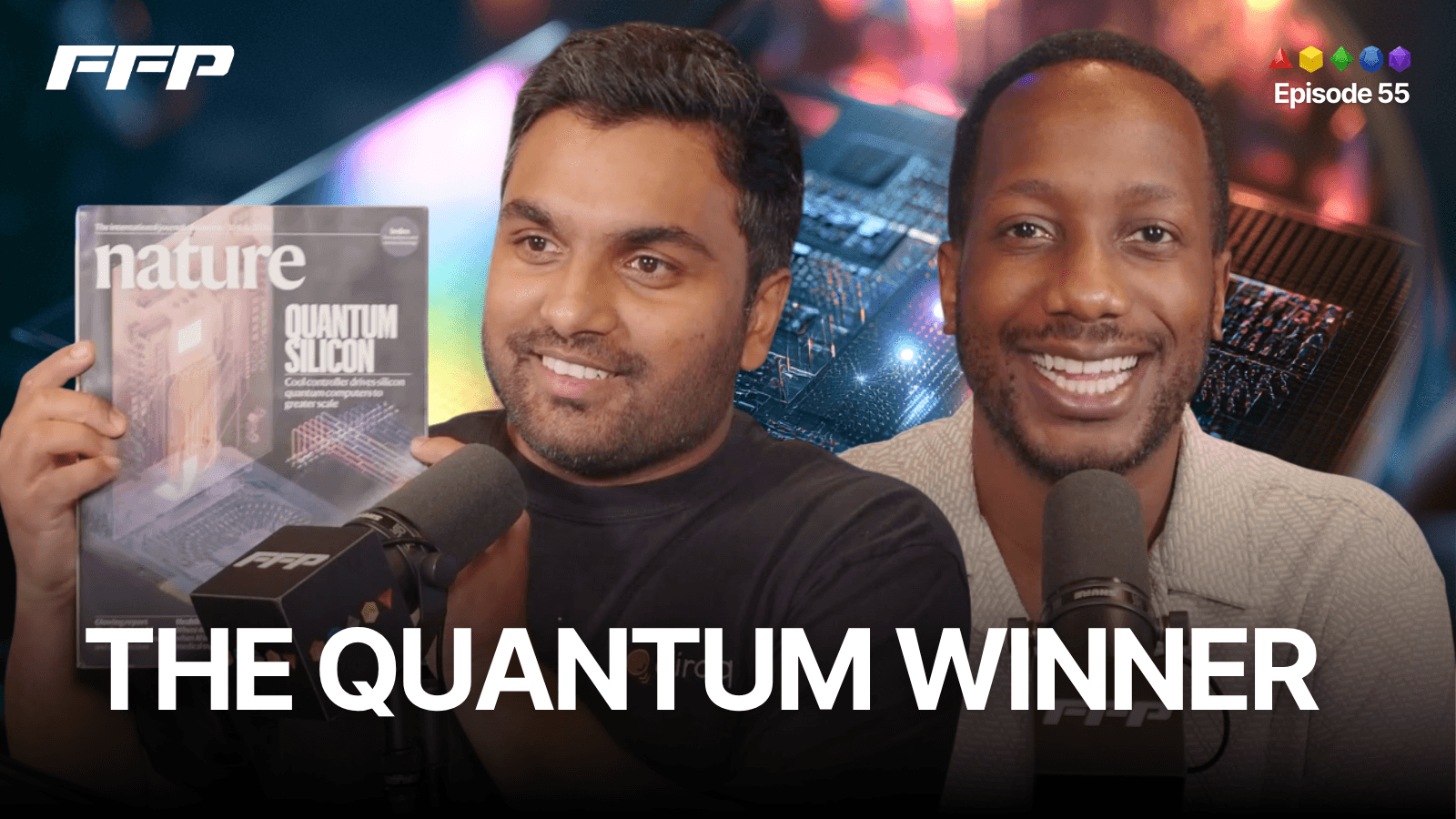
The discussion turns from competing hardware platforms to silicon spin qubits. Krishna introduces the historical proposal that underlies the next part of the explanation.
345 words · auto-generated from the episode video
2:08:03of spin cubits. something that people at the frontier didn't even know about. >> That's right. During your talk. >> Yeah. Yeah. It's not made out of cheese. >> It's not made out of cheese. >> Made out of silicon. >> And it's also on the front page of nature. Unlike >> trapped ions. Unlike >> neutral atoms. >> Trapped ions have been on the front. >> But but we're talking about in 2026. In 2026 before the before times. >> I don't know if neutral atoms have. I know superconducting has. I I didn't see in my research if neutral atoms have if if they have definitely put it in the comments >> supremacy which is the superconducting super that's been on there. So we've seen everybody you know make their claim
2:08:43on the cover. >> Now it's time to see what the supreme cubit is going to look like. I'm giving a lot of setup here because this has been a Christian this has been a lot of hard work. Yeah. You've put a lot of blood, sweat, and tears not only into the work to be a part of this project, but to kind of put this series together to really give all of us as the audience a real understanding of of what it is this means and why in a biased way you believe that this is the best option. And so we are going to get now into understanding spin cubits. >> That's right. We're finally here. Spin cubits.
2:09:23>> All right. the the Nature Cover Quantum Silicon, which we will hang on the wall. I think we're going to now replace our downtown LA with a gallery wall. This will be our first addition. >> Mhm. >> To the gallery wall. Something that is very important. >> Yeah. Um we've covered the three big technologies and now I want to get here. The story actually starts >> in 1998. We're going to do a little bit of history. >> Okay. Um the year 2020 it marked the physical
Quantum HardwareQuantum InformationSemiconductor PhysicsCryogenic Electronics