
Krishna thanks colleagues who helped him move into quantum-device research and develop the skills used in the HRL project. His acknowledgments emphasize how many kinds of expertise contribute to a working experimental system.
1,643 words · auto-generated from the episode video
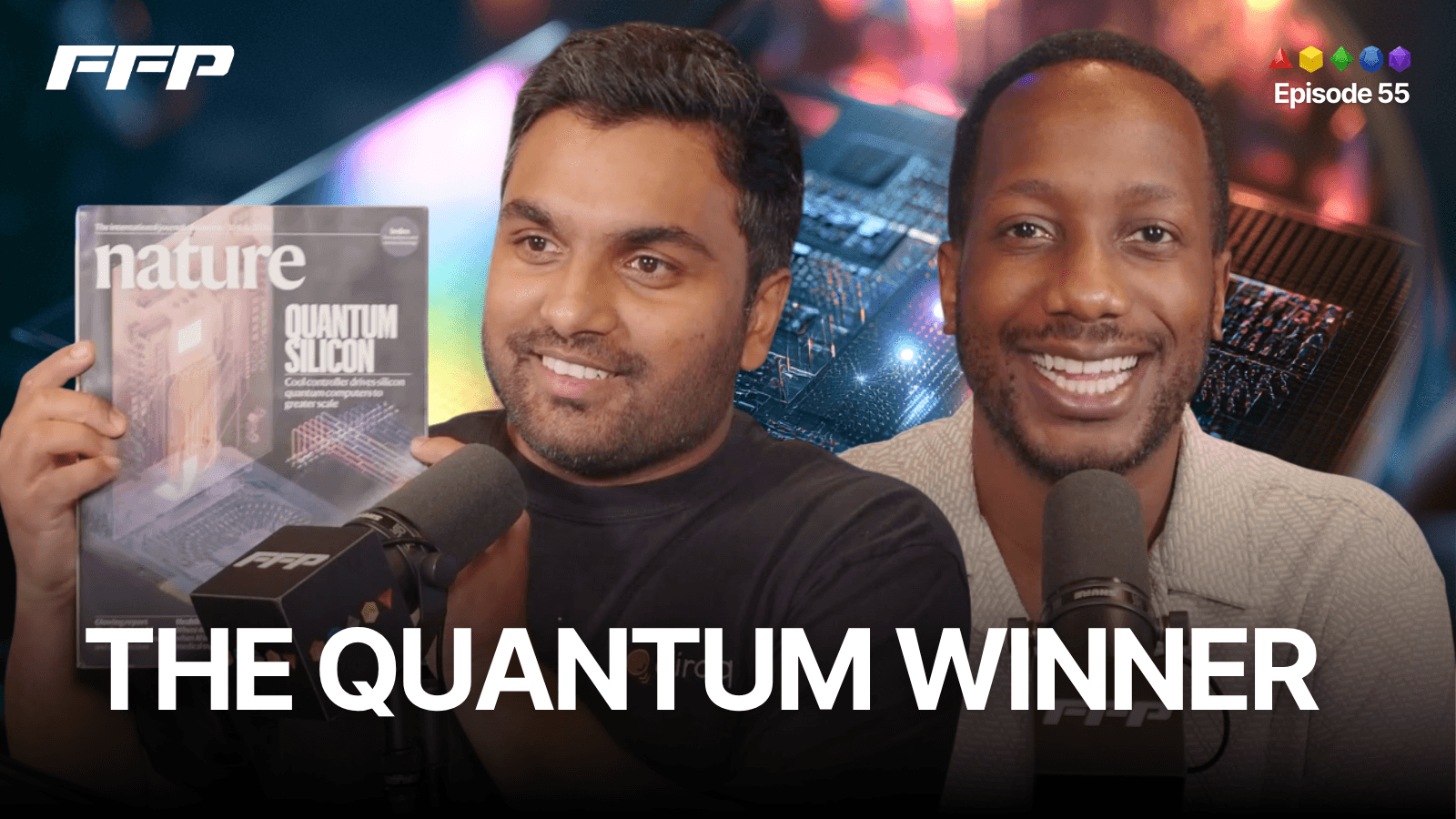
3:34:35[laughter] >> You said it, not me. >> That's true. That is true. >> Um, and before I end my segment, um, I just like to thank some of my co-authors. Now, there's 250 of them. I'm not going to read out every single one, but there are a few that I will name that I had personal relations with at HRL and continue to have personal relations with today. Um, first the three corresponding authors, Thaddius Lad, Jacob Bloomoff, and Matt Reed. That Thaddius Lad very generously um sold me his one of his extra copies of the Nature um physical. He he bought like 10 of them. I I think he's very excited that like this is finally seeing the light of day, obviously. Um I hope you're you made it this far. Um, he's also one of the one of the people responsible for actually getting me to
3:35:16APS because like the the deadline was like on a Friday. I didn't know cuz I don't keep track of these things. I thought somebody would tell me that he's told me. He emailed everyone like, "Hey, is everyone like signed up and like taken care of?" And I'm like, "What?" And there's like, "Dude, there's an hour left." And I'm like scrambling. And he helped me figure out like what session to be in and things like that. So, thanks for that. Um, also like the nature getting physical copies of nature is like a mom and pop shop. >> Yeah. Yeah. >> Like you got to you got to like email someone, then they email you back being like, "Hey, what did you want?" And then you're like, "I want a copy." And then they email you back a form being like, "Okay, fill out this form manually." And then they send it. And a lot of my co-authors who've got these, they got
3:35:57water damage. >> Oh, wow. >> Like I didn't even know mail got water damage these days. But somehow like he he got 10 of these copies. Eight of them had water damage. This one, this this one doesn't. This one's in good condition. >> This one is in great and we're going to enase it in a cryostat so that it that it >> remains uh in good quality cuz this is a big deal. >> Yeah. Yeah. So, a few other people. Patrick Harrington, um congratulations on being a new father. Um Cliff Plesia, thank you for uh sending me some of the videos from APS so I could relive the the big talks. Tina Garcia, um Thomas Harris, and Kevin He. These guys, uh
3:36:37these guys kept my fridge cold at HRL for me so I didn't have to go and refill the liquid nitrogen every week. That was pretty great. Um >> Cameron Jennings, Paul Jurgger, um Steven Carr, John Carpenter, who's the artist behind behind this, Fost Carter, Matthew Borceli, who's been working on spin cubits at HRL for a very very long time. So, um, congratulations on this paper. Kevin Chen, Adam Daly, Adam Daly taught me everything that I know about, um, dilution refrigerators and taught me how to like operate one and keep it cold. That was pretty great. JP Dodson, Gayen Gladill, who is a co-orker of mine now at Dur. So, I see him every week and
3:37:17that's pretty fun. Aaron Mitch Jones, um, >> really great in like bringing me into the fold with the, um, HRL quantum project. Raj Kati, Joseph Kirkoff, Justin Christensen, who was a classmate of mine at UCLA um PhD and then we both ended up at HRL. Andrew Pan, Matthew Rker, Matthew Rker had a great um like cubits class where he actually taught me from fundamentals from for its principles. All right. How um the exchange cubit worked things like that. He was he was very patient with me. That was really >> use this pod in future classes. >> Yeah. uh Rashan Sajad Christian Snyball, congrats on your second kid. Both son
3:37:58Skyler Turner and Alan Sanenian who are both now colleagues of mine at DRock. Um Aaron Weinstein, Aaron Weinstein was the first author of the 2023 paper, the the Universal Logic one. So, props on that. And then Adam Holmes. And finally, the automation team that I was a part of. >> Um Alwina Louu, she's a big fan of the podcast. I hope you've listened all the way to where uh you can now hear your name. I hope the sound is fixed. I I know you've been complaining about that, but >> let us know. >> Yeah, let us know fixed for you. [laughter] >> Um Ian Jenkins, Joe Kern, um John Mietta, uh last, no, not last, but uh definitely least, I have to say, Sam
3:38:41Mumford. We have a long history, this guy. Um he was a classmate of mine at Princeton. >> Okay. And then uh so he was a he was he was he lived down the hall from me in 1941. Really? Yes. Former Wilson College, then First College, then it got demolished and now it's called Hopson College. I don't know if 1941 Hall is going to make it back. But he was he lived down the street from me. I not down the street, literally down the hallway. Um uh so in freshman year. So he was he was one one of my first friends at Princeton. We took um physics classes together and he was in physics with me. Um he No, you don't know him. He never hung out at Ivy. He would He would He went around other places than
3:39:21Ivy. Don't you don't you throw dirt on my name. [laughter] He'd be hanging out with the uh with the engineers at Charter. Um but he you know, jokes aside, very instrumental in bringing me up into the fold. He was uh you know, we're old friends and I hope you're listening to this one episode. I know you don't like listening to it. Um [laughter] but whatever. You know, it is what it is. Um so Sam Sam Mumford and last um definitely not least um maybe most is Terresa Breck, longtime fan of the pod, >> number one fan, >> a patron of the podcast arts. Um but more importantly from a personal level
3:40:01um she was my boss at HRL and she was the best boss that I've ever had and she also took a chance on me with getting me into the spin cubits program because I started at HRL as um just a machine learning guy right and I was in the intelligent systems lab and I was telling you that like I was working on like these tiny bespoke machine learning projects wasn't really you know fitting my um ambition ition levels and like interest levels and then the quantum silicon team was in need of like machine learning people to do the automation stuff that we had just talked about and I joined that group and then finally
3:40:42when when time came I asked Teresa to like formally put me into the HRL quantum team which she did she gave me a chance um and I ran with it and so because of her really I'm on this I'm on this paper so thank you Teresa for that and that will end my 3 and 1/2 hour tirade about um a paper that I am on the cover of Nature for. So, you know, it's tough, but I don't really I don't really regret spending three and a half hours because this is a this is kind of a dream come true to be honest. >> It's monumental. >> It's on the paper. It's on the cover of Nature, dude. Like even like the the you know, I I didn't write a single word of the paper, but I was involved in the
3:41:23science and that's something that I think we can all be proud of. All 250 of us. That's a really big deal. Congratulations again. >> Thank you. >> I I will just note for those who are tracking the information and security on the project. I've had no idea what Krishna did for work for the longest time cuz it was classified and that was so annoying. But I knew when the time would come I would get to learn what it is you did cuz I knew you were so passionate about it and you were excited and to be able to sit through both parts of this and really understand at a at a real level kind of what it is you've been working on in the world you've been living in for so long and continue to do so um has just been such
3:42:05a blessing and um just congratulations to our resident PhD. We have already kept you all long enough. So I will not pontificate any longer. If you can share a like, share, if you are still here >> and and you're trying to listen to this the song like let us know. >> Let us know. >> Seriously, just say I'm still here. It's going to be mind-blowing. >> Anything. This was meant to be two parts. We didn't want to make it three parts, so we just said we're going to do it. A like, a share, a comment, a five star can really do a lot for us to get this podcast to more people. We are the best science show on the planet. Uh people want us to make it shorter, but we can't because the science is just so
3:42:45good. >> There's a lot of people who don't want to make it shorter. >> Yeah, there is. And clearly, we're not. [laughter]
Quantum HardwareQuantum InformationSemiconductor PhysicsCryogenic Electronics