
1,178 words · auto-generated from the episode video
9:27construction of a base in 2030 and also have a nuclear reactor be ready to launch towards the lunar surface by 2030. And NASA administrator Jared Isaacman >> purported that sentiment, right? And this is all to prepare us to go to Mars because we want a permanent base on the moon. And that way from moon we can sort of piggyback and go to Mars. We can establish a permanent base on the moon. We can understand what it is like to live on another celestial body without oxygen, without all of the comforts of the Earth's atmosphere and all of the hard things. If we can do that, you know, in our local neighborhood, then we
10:08can go to Mars, which is a year away. Best case scenario, >> it becomes this way station. It's like a training ground and a way station. >> Yes. >> Or way point rather where like >> you can do a whole especially I'm not saying that we we're there yet but there are a bunch of TV shows that talk about how there's all the H3 that's below the surface of the moon and that's very very fuel efficient and if we can figure out how to mine that >> um then again it becomes basically a refueling point on the journey to Mars. >> Mars. Yeah. Exactly. And in the Apollo paradigm, it was urgency driven as you said, right? We we got to we got to win. And so 2.3% of the total federal budget
10:50was given to NASA >> to make this happen. That's a lot. >> That's a lot. >> That's a lot. Okay. I love science and I love technology, but 2.3% is a lot. Now, if you put that in the context of how much we spend on the military, perhaps it's not a lot, but I I I would say two 2.3% is is quite a bit, right? But it's a totally different paradigm. With Artemis, you've got this space economy and the goal is to have a sustained presence, right? So, you've got this lunar getaway, you've got insitu resource utilization, that thing that you were talking about where we utilize the resources of the moon. And we're
11:30partnering with agencies that are commercial. For example, SpaceX, the Starship human landing system. The way we're going to land on the moon is currently contracted to SpaceX. Right now, this is the same as before. Um, Grumman, which is the predecessor of Northrup Grman, was actually involved in creating the lunar lander. So, this is not different, but now with Artemis, it's a completely different scale. >> I will just make a quick note. If you are a fan of Elon Musk and you are not a believer in the moonlanding, you should talk to Elon Musk because he's clearly a believer in the moonlanding and he got the contract to do it again. >> Yeah. >> And so I'm just trying to put two and two together here. The math the math
12:11needs to equal. >> Yeah. And if we were to if we were to stay on the topic of SpaceX and Elon Musk, there's a side note. So, um, NASA administrator Sean Duffy last year actually reopened the human landing system contract because the aerospace safety advisory panel is warning that SpaceX's Starship human landing system is going to be years late. >> Okay. He was then fired >> and then he was replaced by Jar Jared Isaacman who's a billionaire commercial astronaut. Um, neither the demonstration nor the design certification review, which was supposed to happen in the summer of this past year, has happened.
12:53And there's not really any information about what the status of that human landing system is. But it's like it's quite urgent because China says they're going to get there by 2030, >> right? >> We're cutting it quite close. >> Yes. you know, >> and we know that they are putting all the resources to bear to accomplish the goal. Yeah. >> Just given their system and how it's structured, it's t, you know, they can they want something to happen, >> it happens. >> It happens, right? Because they just say what happens >> and then >> and then it happens, >> right? Um, so with all that in mind, now we're here with Artemis 2, right? This is the critical crude validation flight,
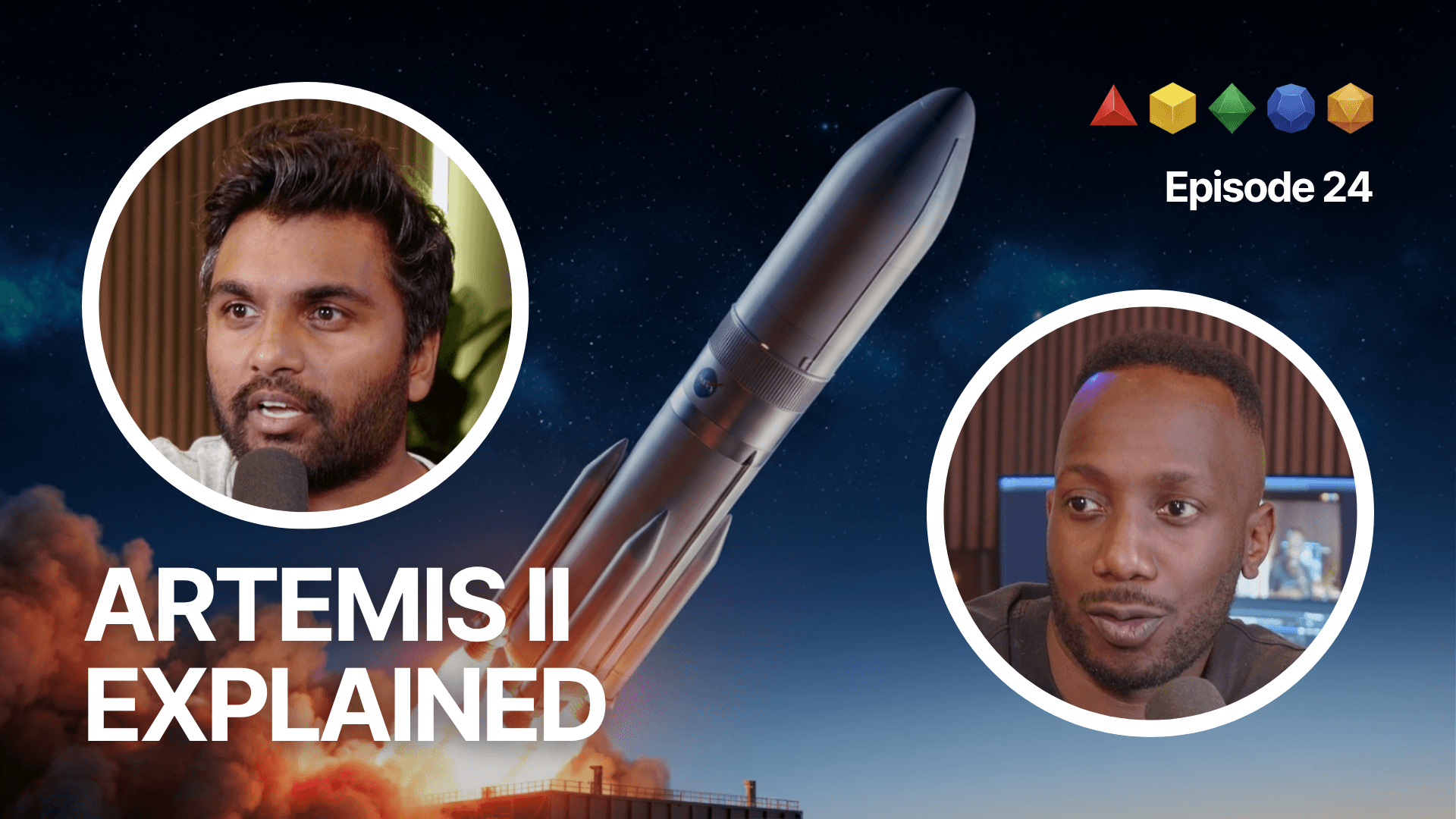
13:36the Artemis 2 rocket, which we have here that Lester has painstakingly made [laughter] with Lego blocks. >> Shout out LEGO. >> Lego. If you want to sponsor the show, you know we're here. [laughter] >> Yeah. Well, he made this thing and this thing is now currently sitting on the launchpad at Kennedy Space Flight Center in Florida, >> which we touched on in our rundown on the last episode. >> Yep. Yeah. Yeah. And so now, as of the publishing of this episode, it should still be there. February 6th is when the window opens up. And fingers crossed. And just just before we get to the rundown, we're going to break this up into two parts. I I want to just zoom in
14:18on this launch window concept because you know some of the reactions going be oh this are the studios not ready for the production [laughter] or like oh of course that it's going to get delayed you know and I think helping understand the idea that when we have a launch window right like we are both you know we're spinning and in orbit of the sun and so is everything else and so >> when you talk about launch windows it's about >> how your flight trajectory is going to align with the normal movement of the planetary bodies around us >> such that we, >> you know, we have a certain amount of fuel. We have everything is very precise. >> Everything is very precise. Yeah. >> So there's there's only like a few paths to getting there based on what we've
14:59built to get there. >> Exactly. And it depends on what we want to do with the moon. Right. We're not landing on the moon with Artemis 2, but if we want certain spaces on the moon to be lit up, we need to time it with the phases of the moon. >> Right. >> Right. And so that's why the launch window is like early February and then it's late February and March because the lunar month is 29 days and we need to >> you can't just go at a random time. >> Yes. >> Right. >> Yes. It's not it's not it's not the subway where it's just like it's constantly running. >> Yeah. Yeah. >> That there are the dynamics that and I just wanted to make sure we touched on that briefly because >> Yeah. Yeah. Yeah. Good. Good. >> For folks who might not understand the concept of a launch window, that's kind of where it comes from. Before we get