
838 words · auto-generated from the episode video
10:23that's that's it. That's all we could get. And we can imagine, you know, as we continue to expand in our own local solar system and otherwise, having electronics that can survive high temperature environments is going to become >> Yeah. >> a valuable asset to expand where we can actually go. >> Exactly. I mean, I'd like to know more about the surface of Venus, right? We know we we have better surface images of Mars, Pluto. We have we have better surface images of Pluto than we do with large swats of Venus, which is our nearest neighbor. Venus is closer to us than the Earth. And we still don't know what's under those clouds. >> So unbelievable, >> right? And it's just because it's just it's it's a completely
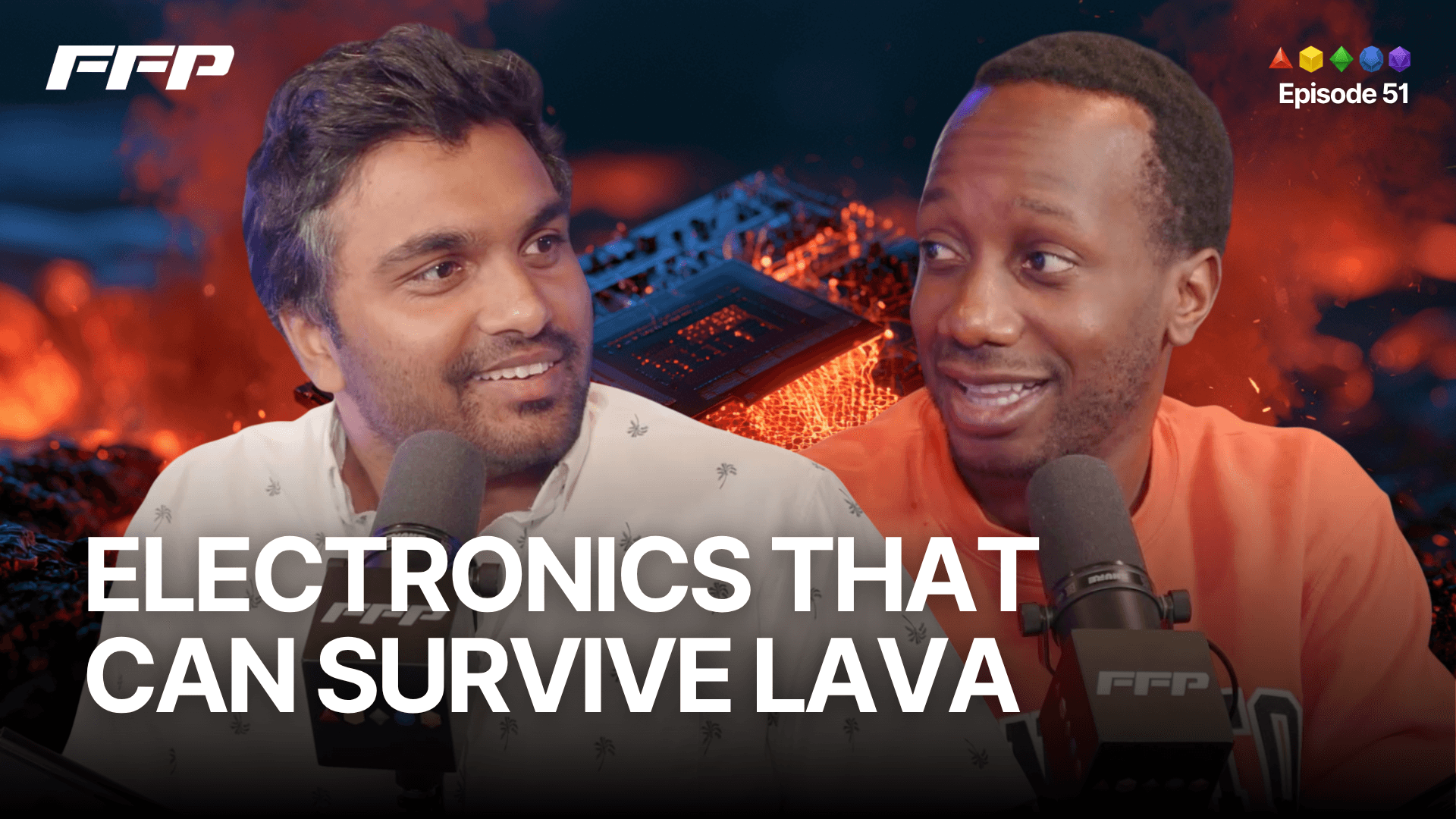
11:05messed up situation to get down there on the surface. Everything fails. >> We can't stand the heat, so we can't go in the kitchen. >> Yeah. Exactly. Exactly. Um, and into this landscape comes this paper that was published by USC. It's describing something I think genuinely new. Okay, it's a Meister, which is a memory switching device. We're going to get into what that is. And it's made from graphine, halfium oxide, and tungsten. And it operates reliably at 700° C. >> That's unreal. >> 700°. Yeah. They've they've raised the temperature like by a factor of more than two. And so there's something fundamental. There's a there's a real breakthrough
11:47here that's beyond an iterative upgrade. >> Yes. Yeah. There's it's it's I think it's really cool. I mean, it's hotter than molten aluminum. Aluminum melts at 660° C. If you put this thing in a vat of aluminum, it will still retain memory. It's hotter than the surface of a lava flow on Earth. Not all lava flows. I know there's going to be people in the comments being like, "No, >> the vulcanologist." >> Yeah. Yeah. The volcanologist is going to be like, "No, lava is hotter than that." Actually, um, there is a volcano in Tanzania, [laughter] the old Doyo Langai volcano, where the lava is 600° C. Okay. So, there exists a lava on Earth where I could put this
12:27chip and it would still work fine. So, the tagline still kind of works, [laughter] right? If if you if you took it to Hawaii and put it in the lava in Hawaii, it would not. I think Hawaii's is like a thousand plus. But it perhaps might and we'll get into that later. >> We're on the path. Yeah. Um the other crazy thing about this is the chip the the Meister device it maintained stable data retention for 50 hours. Really >> 50 hours. And it retained that data retention after a billion switching cycles without failure. >> So this is both high temperature and long duration comparatively to where we
13:08were before. Yeah. And the physics is actually like it gives you both >> which is in cuz both are different. >> It's like a graph on different axes and you can have high temperature. It's like okay great but it's a microcond. >> Yeah. Yeah. But and here what's what's cool is it's the same physics that's giving you both endurance limits which I think is really really cool. It's by I think it's by a large margin the highest temperature at which any nonvolatile memory has ever been demonstrated to work. >> This is it's really really cool. And I mean why should why should like normal people care okay not scientists? Well I think the border between environments where we can put intelligent electronics and environments where we cannot is
13:49about to shift >> dramatically >> and then our understanding of everything about the world around us changes in a in a very big way. >> Yeah. I mean it affects how we drill energy, how we explore planets, how we monitor volcanoes, how we put data centers in space. That has a lot of social and political implications for our society because then maybe maybe we don't need to, you know, like take everyone's water. >> If you don't want a data center in your backyard, this story matters a lot because we can just put them in space. >> Yeah. Yeah. I mean, it's it's one of these like quiet material science results that uh it doesn't make the front page of the New York Times, but I think it's going to expand the frontier
14:30of what our civilization can do. >> You're saying there's a chance. >> Yeah. And I think I think I think it's an incredible story. We are going to get into the details of I this has been such a big conversation in the business and technology world. we are so overleveraged on AI in the US uh in terms of its impact on our GDP. Everyone's saying it's fine because we're going to put data centers in space and it's been very contentious as a
Materials ScienceSpaceComputing