
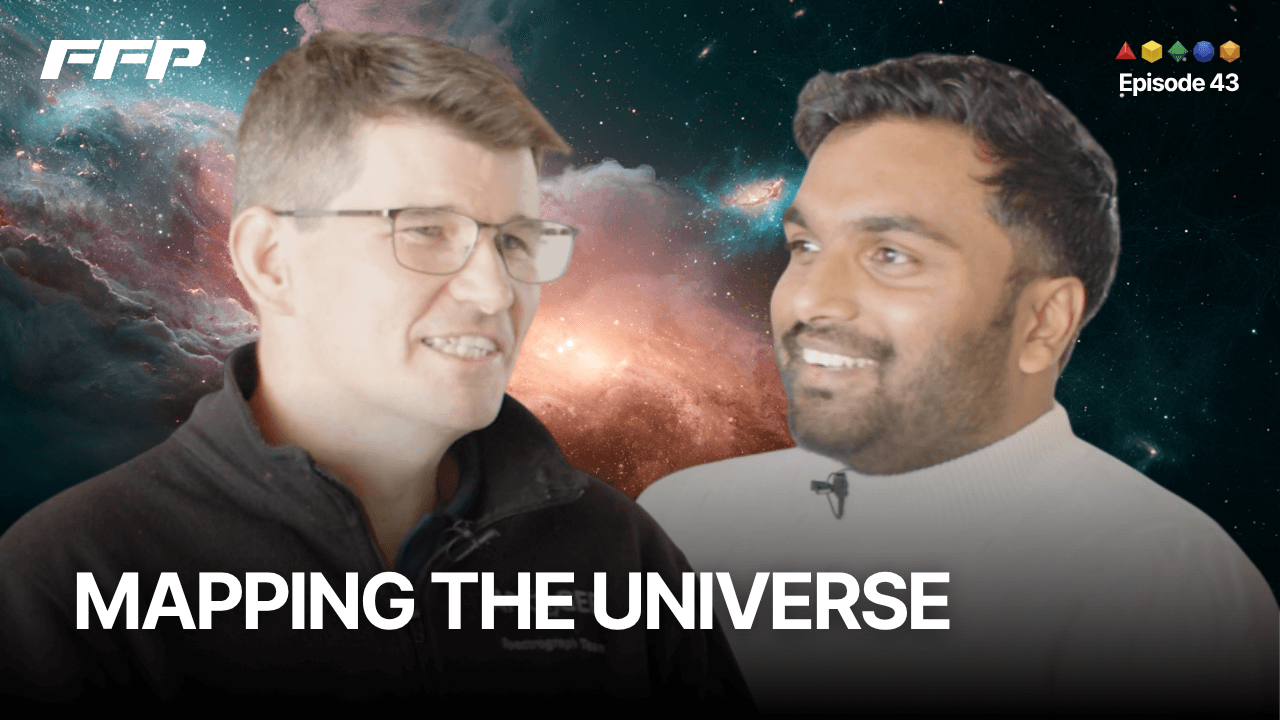
Michael Blanton explains why he left NYU to become Director of Carnegie Observatories. He points to the daily exposure to a wide range of astronomy expertise at Carnegie, the engineering resources at Las Campanas Observatory, and his own past experience as a Sloan Digital Sky Survey director, which taught him he enjoys the administrative work of enabling other scientists' research while staying close to actual scientific decisions.
- 01
Blanton notes Carnegie's Las Campanas Observatory already partners with SDSS, and in SDSS 5 the survey is using the 100-inch telescope there exclusively.
- 02
He contrasts the director role with being a university dean, saying it stays much closer to scientific decision-making rather than pure administration.
483 words · auto-generated from the episode video
15:15talk about your transition to Carnegie. You've got a new job now. Congratulations, by the way. >> Thanks. >> Um you left New York for the best city on the planet, Los Angeles. >> Okay. >> I mean, you left your native >> out, but you know, not to us. >> So, I grew up here and uh you know, I've always loved it. So, welcome to Southern California. This is an institution. Um Hubble walked these halls, you know. Why why make the move? What about Carnegie brought you here? >> The astronomy. >> Yeah. >> Um so, it's in a department a department of physics at NYU. Um and one of the things I've I've
15:56even in this first month is just really clear is is just uh just every morning there, you know, uh there is such a range of experts here talking about every single aspect of a of a astronomy. You know, yesterday someone's talking about very large-scale structure. People are talking about exoplanets. It's really like that. So, one of the main draws for me was just that environment where where uh where I'm learning something new every day from the people around here. Uh and
16:37and so so, that's actually the fundamental thing. Um another thing is just simply the resources in terms of the engineering resources, Las Campanas Observatory is an amazing facility. Um and uh and and SDSS actually partnered with Las Campanas. We actually um >> Oh, yeah. >> Now, uh you know, uh in SDSS 5, they're completely using the 100-in telescope. Um and that's that's a uh you know, uh so, I've had a you know, a long you know, a decade or so of experience
17:19working with Carnegie already through that. >> Right. >> Um, and then in terms of the job itself, like a director job, I was I you know, I started in SDSS as like, you know, writing software, which actually kind of still do. >> Right. >> But in in a previous phase of SDSS, I was the director. Uh, and I sort of learned at that time that I I kind of liked enabling science. I got a satisfaction from making it possible for people, as you said, get at their data, but also get the science they wanted done out of the project.
18:00And so it's an admit like that was an administrative and leadership role, uh, but very close to the science. So like not like no offense to any deans, but not like being a dean, like like really like very close to the scientific decisions. >> Mhm. >> And and I think and this job being director here, I I think has that same flavor. You're very close to what people are doing and the you know, the sorts of decisions they have to make that that require scientific judgment. Um,
AstronomyAstrophysicsOpen DataCosmology