
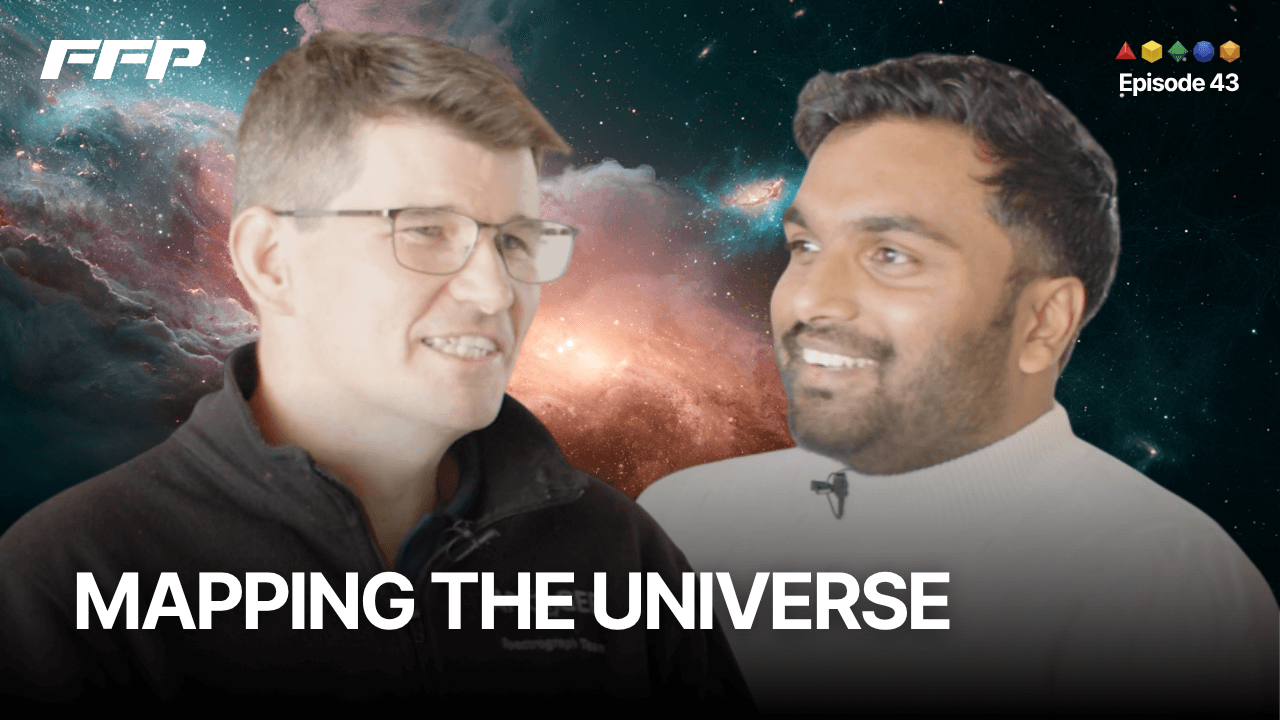
Michael Blanton describes how the Sloan Digital Sky Survey helped make public data a central part of astronomy. In conversation with Krishna Choudhary, he connects the shift from photographic plates to digital observations with the ability to share measurements widely. He argues that making data useful also requires sustained work on access tools, documentation, and infrastructure, not simply releasing files.
- 01
Blanton recalls that promising public access was part of SDSS's original approach, despite concerns about other researchers publishing first.
- 02
He credits Alex Szalay's work on SkyServer and SciServer with helping make the data accessible to researchers and students.
- 03
Open access lets people ask questions that the original survey team may never have anticipated.
797 words · auto-generated from the episode video
3:29your PhD there at in astrophysics. Um one of your advisors was Jeremiah Ostriker. >> Yeah. >> And he was seminal in starting, or at least initiating, the concept of the Sloan Digital Sky Survey, which was this monumental effort to map out a large swath of the universe. And um one of the things that I've read about the SDSS is that it completely sort of changed the culture of astronomy from, you know, now you guys were just putting out the data for free on this newly formed internet. Could you talk a little bit about what astronomy was like back then and how it's changed today?
4:11>> Yeah, so so Jerry was one of my two advisers. Um, and indeed at that at that time he was putting together the the Sloan Digital Sky Survey. Um, you know, at at you know, if you look back at astronomy in the, you know, before around that time, it was the mid-90s, you know, a lot of the data was accumulated in non-digital forms. So, there were still people collecting data on photographic plates. >> Wow. >> Like glass plates that had emotion on them. They had uh uh and digital detectors had been
4:51introduced. Um, and uh other electronic detectors uh before, you know, uh before that. Um, but they they really hadn't been as large-format. You couldn't do like a large like if you were imaging the sky, you couldn't get like a really big CCD to actually do that. Um, and and so for that reason a lot of things were still photographic. Um, you know, the uh the you know, starting around 1990, it became possible to conceive of things which were bigger and digital. And once
5:32you are doing something digitally, you are then able to share it in in a much, you know, much you know, much more broadly, much more easily. >> Right. >> Um, and so a few people recognized that that was going to be a possibility and for example the people at you know the Hubble Space Telescope which obviously was sending data down digitally. >> Of course. >> Uh they they had um they had a lot of uh you know data distribution uh to the community um and SDSS was this other big digital thing that was happening and partly
6:13in order to help fund the survey and motivate the National Science Foundation and the Sloan Foundation to fund it they promised somewhat uh uh somewhat rationally maybe to make it all public and freely available. >> Yeah. >> Um and and that was very new just because both because of the technology but also just because of the culture there and I there was a genuine concern among people that like oh you're really giving away the store here you'll get scooped. >> Yeah, yeah. >> Uh which is >> I remember that. >> No we which is a term I normally associate with you know you know
6:53you know characters in the front page or something or rather than scientists but but but some scientists are afraid of being scooped. Okay. Um and but SDSS really from the beginning had a very different philosophy of of eventually making the data fully public. This I was a graduate student at the time I was doing theory. >> Right. >> So I wasn't I wasn't part of conceiving of it that way but when I heard about it it seemed like so intuitive like that's the right thing to do you you know you make the data available you make it uh uh so any astronomer can get to it and you're going to get a lot more out of the data. They'll people will be able to collaborate freely they will do things
7:36you know you hadn't thought to do um and there's just too much science with a data set like that for everybody to do. Um I think what's been surprising to me over the years is that so to do that right, you have to really spend enough money to make it good. >> Mhm. >> I think the genius there was Alex Szalay at Johns Hopkins who actually, you know, made the the SkyServer and later SciServer which which really made things accessible uh to everybody to like middle school students and >> Right. >> as well as astronomers. Um and you you have to spend the time and
8:17effort to do that. And I think what's been surprising to me over the years is you have to keep telling people that lesson. People still have an instinct to keep their data close and to not spend the effort to make it freely available. Um and uh and that
AstronomyAstrophysicsOpen DataCosmology