
363 words · auto-generated from the episode video
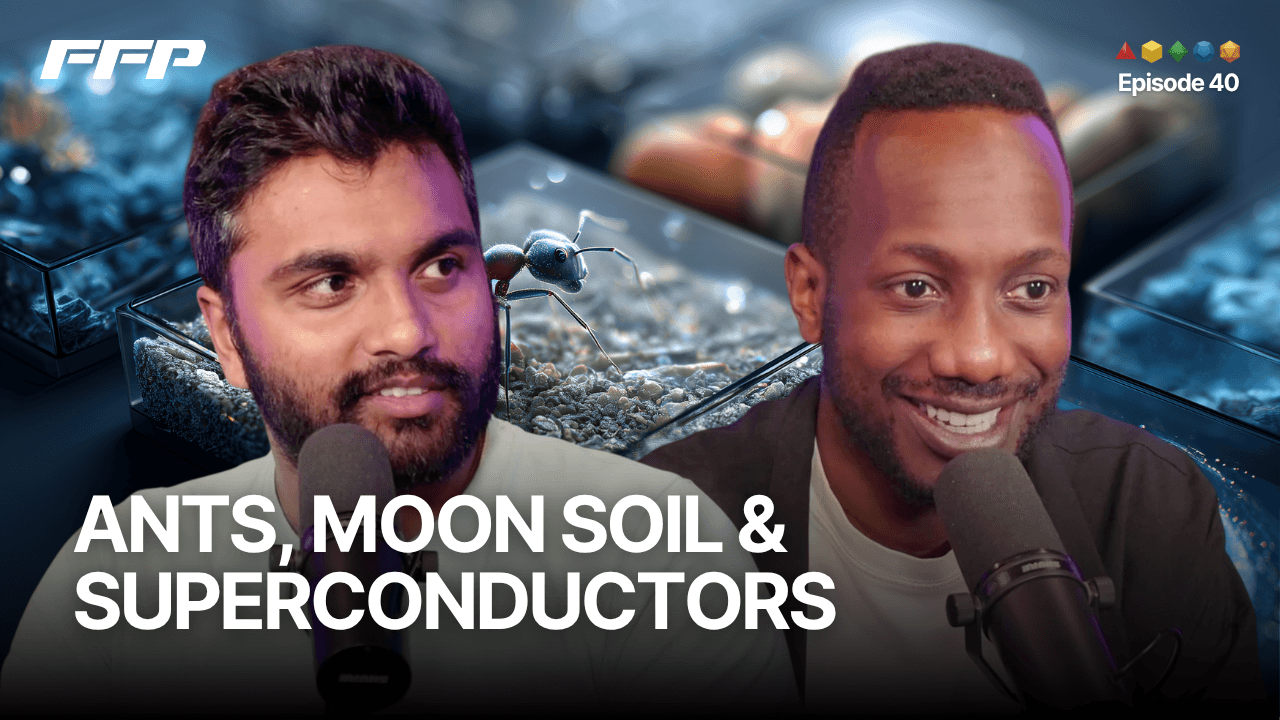
2:02>> So for our first story, we are going to be talking about ants, like the movie, the Pixar movie. Uh 3D scanning of thousands of ants with a particle accelerator team led by researchers at the Okinawa Institute of Science and Technology uh used a cyclotron particle accelerator to create detailed 3D micro CT scans. I've gotten a couple CT scans, but not a micro one. Uh of a 29 2100 ant farm colony with nearly 800 species. And this was published in Nature Methods because the method is what is interesting here. Yes. So for the longest time, if we want to find if we want to make like a 3D version of
2:44these really tiny insects, and we want to do it to super super high resolution, you use something called a micro CT scanner. This thing is going to send out x-rays, and then those x-rays are going to scan and allow the scientists to examine like the physical structure, the stuff inside without actually like destroying the specimen. Each of these scans takes about 10 hours for a single specimen. So it's not very high throughput, right? And we want to be able to do a lot in parallel. And so that's what these researchers did. They employed the Karlsruhe Institute of Technology, which has a giant synchrotron particle
3:24accelerator, x-ray imaging. It's also got robotics. It's also got artificial intelligence. And what they're able to do is generate interactive digital reconstructions of 800 ant species. Mhm. It's pretty incredible. If we If we look at the the headline, right? And if we look at this animation, look at the detail that we're getting this ant. >> This is This is crazy. >> Yeah. This This at micron resolution of an ant, right? And this is rendered using AI because a lot of times we get little slices when we do a CT scan, we get like little slices or like different sort of configurations of what the ant
4:06is in, depending on the specimen, but you can use AI now to reconstruct that 3D version of the ant. It's It's really quite amazing. With that setup they've
Artificial IntelligenceAstronomyBiologySpaceMaterials Science