
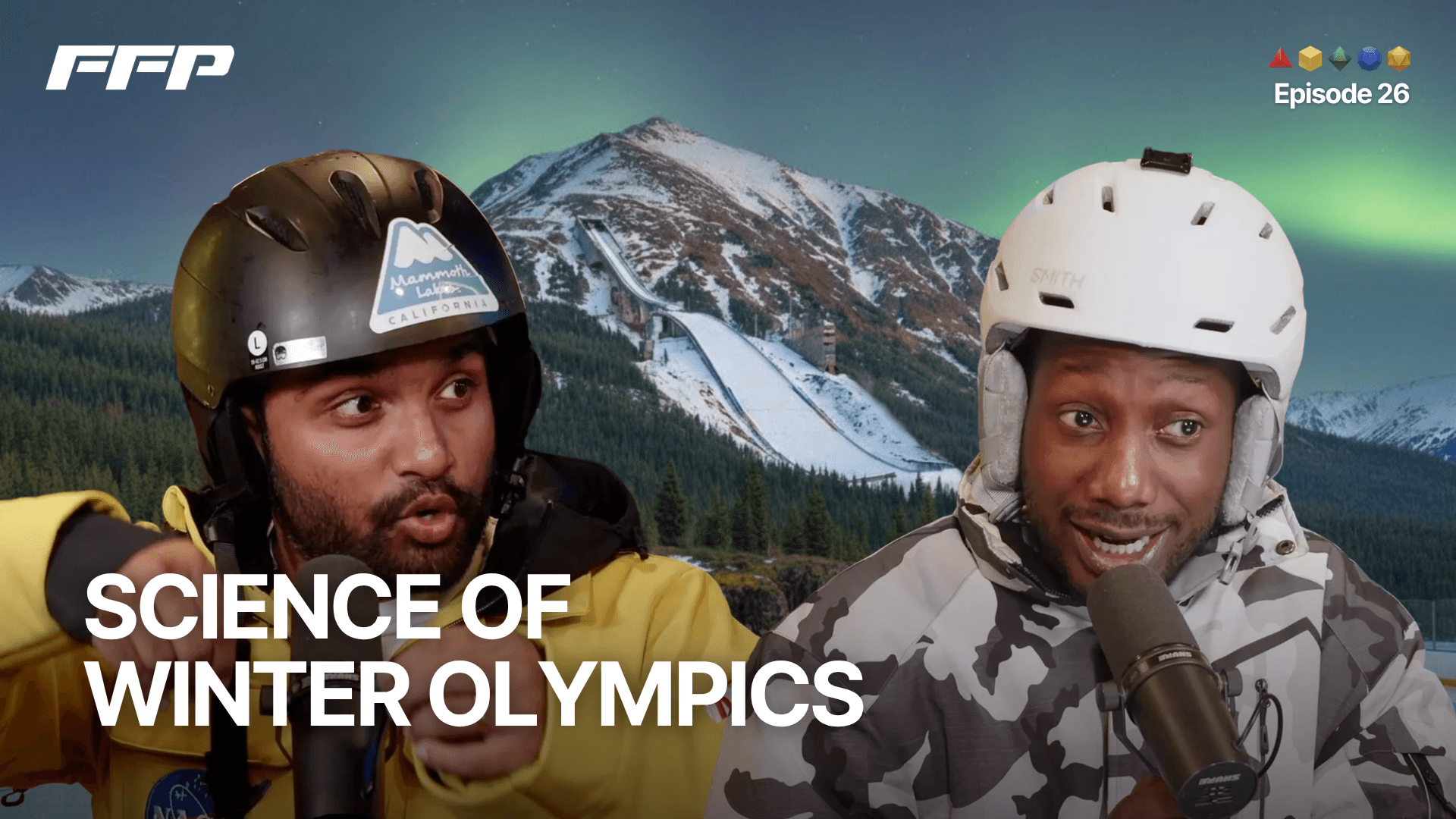
247 words · auto-generated from the episode video
0:32Hello internet, this is your captain speaking, Lester Nar, joined as always by my co-host and our resident PhD Krishna Chowdery. For those watching, if you could not already tell this week, we're going to be doing a deep dive on the Winter Olympics as we've dawned our ski gear appropriately. This week we're going to cover three scientific areas. We have a physics story, a neuroscience story, and also a climate change story along with some other random thoughts. We're going to start off with a story about ice being slippery. >> Yeah. >> In the Winter Olympics, every sport depends on ice being slippery, but the science and physics specifically behind it is actually non-trivial.
1:13>> Yep. >> We'll follow that up with a neuroscience story around the idea of choking. Right. Obviously, the stakes are high, especially at the Olympics, and there is really good neuroscience around why do people choke when the stakes are so high. We'll wrap up with our climate change story and a couple of other interesting tidbits as it relates to our deep dive on the Winter Olympics. You are going to learn stuff today because we're going to break down the science from its fundamentals because this is from first [music] principles.
1:53>> [music]
2:02>> my friend, we are dawned and prepared for our Winter Olympics deep dive. >> Yes. >> My first question for you is what event cuz I know what you're good at and so