
All Research

The dynamics of AMPA receptors underlies the efficacy of ketamine in treatment resistant patients with depression

Nature Astronomy·
Read the paperDOI: 10.1038/s41380-026-03510-w

TL;DR

Think of your brain as having billions of tiny locks and keys. One particular lock — called the AMPA receptor — sits on brain cells and helps them talk to each other using the chemical glutamate. In people with hard-to-treat depression, this study found that those locks are less plentiful than normal, especially in emotional brain regions. When doctors gave these patients ketamine, it actually changed how many of those locks were available on the cell surface — and the bigger that change was, the better the patient felt. So ketamine isn't just temporarily numbing pain; it appears to be physically restoring a broken communication system in the brain. The scientists confirmed this by using a special brain scan (PET scan) with a radioactive tracer that literally glows where those AMPA receptor locks are located, letting them count them in real time in living people.
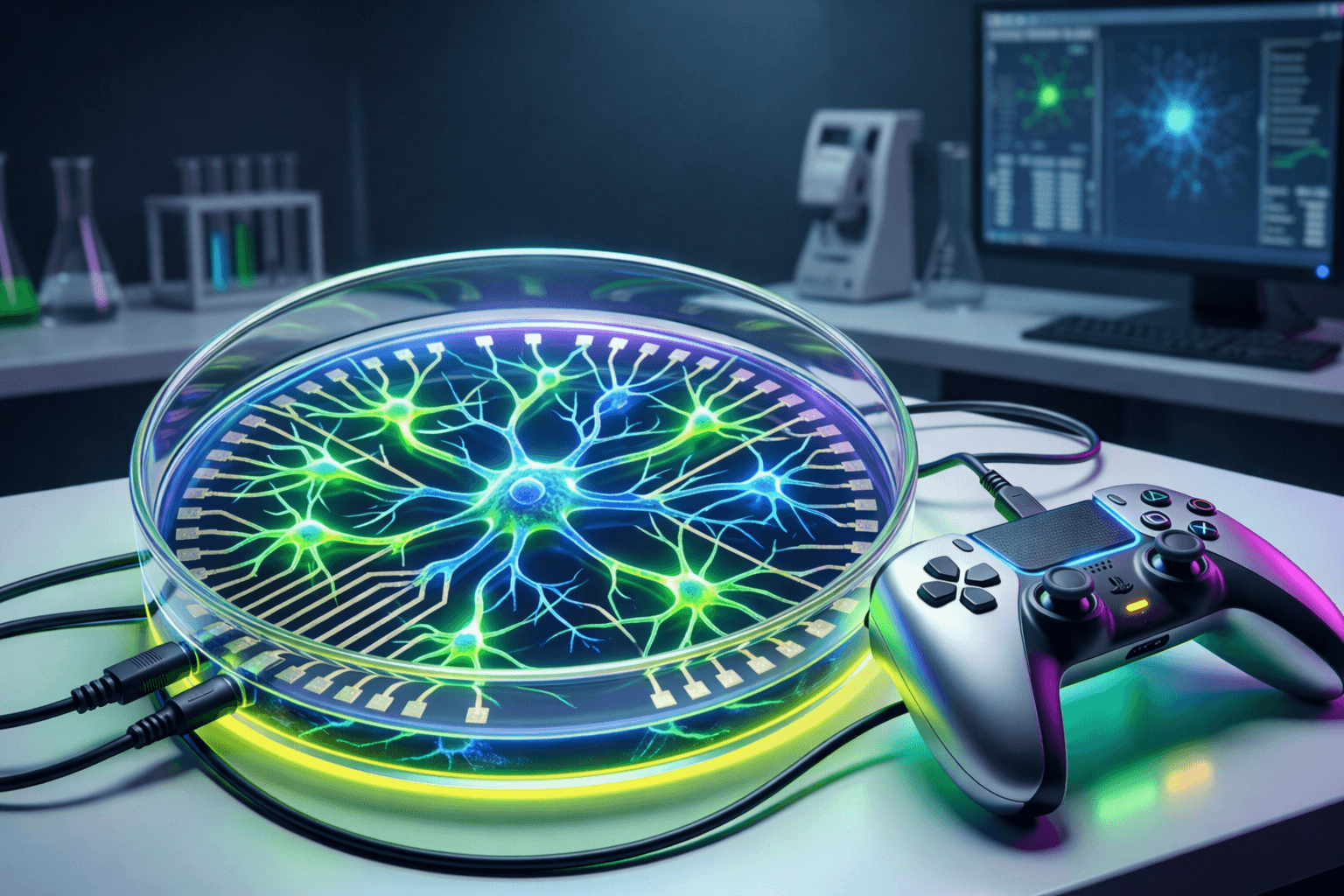
Approximately 30% of patients with depression suffer from treatment-resistant depression (TRD). Ketamine has shown antidepressant efficacy for TRD. While glutamate alpha-amino-3-hydroxy-5-methyl-4-isoxazolepropionic acid receptor (AMPAR) has been demonstrated to play crucial roles in the process of pharmacological action of ketamine in experimental animals, it remains elusive how ketamine exhibits its efficacy through changes in AMPAR dynamics in patients with TRD. In this study, using a positron emission tomography (PET) tracer, [11C]K-2, which depicts AMPAR density in the living human brain, we detected a negative correlation between AMPAR density and illness severity and differences in AMPAR distribution between patients with TRD and healthy participants. Furthermore, we detected brain areas where ketamine administration altered AMPAR density in significant correlations with ketamine-induced antidepressant effect in patients with TRD. AMPAR density alteration in these regions partially rescued AMPAR phenotype in the affected areas. Thus, AMPAR dynamics underlies the antidepressant effect of ketamine in patients with TRD.

  • 1AMPAR density showed a negative correlation with illness severity in patients with treatment-resistant depression (TRD) as measured by the PET tracer [11C]K-2.
  • 2Significant differences in AMPAR distribution were detected between patients with TRD and healthy participants.
  • 3Ketamine administration altered AMPAR density in specific brain regions, with these changes significantly correlated with ketamine's antidepressant effect.
  • 4AMPAR density alterations following ketamine treatment partially rescued the AMPAR phenotype in brain areas affected in TRD.
  • 5In reward-related brain regions including the habenula, a decrease in cell surface AMPAR expression was significantly correlated with ketamine-induced antidepressant effect.
Scientific American·

The 2026 World Cup's grass is an engineering problem

Imagine you're trying to play soccer in 16 different places across the United States, Canada, and Mexico — some in freezing cold, some blazing hot, some in stadiums with roofs that block sunlight. Half of those stadiums normally use fake grass. Now FIFA, the organization that runs the World Cup, wants every single pitch to feel and play exactly the same way, like a video game where every level has identical physics. To do that, they hired grass scientists — yes, that's a real job — who figured out how to grow special grass on thin mats with plastic underneath so it can be transported like a carpet, stitched with synthetic fibers so it doesn't rip when players sprint and tackle, and tested by literally shooting balls at it with a cannon to make sure it bounces right. Different grass species are used depending on whether a stadium is hot, cool, or dark. It's basically a giant, living, high-tech floor installation that has to survive the world's best athletes running on it.

Nature Genetics·

Non-Mendelian inheritance of DNA methylation patterns in mice

Imagine your DNA is like a huge book of instructions. Mendel's laws are the normal rules for how chapters of that book get passed from parents to children. But there's also a layer of sticky notes on top of the book—called epigenetic marks—that tell cells which chapters to read and which to ignore. This study found that most of the time (about 93%), these sticky notes follow the normal inheritance rules. But about 7% of the time, they do something unexpected: new patterns appear that neither parent had, or a mark from one parent somehow silences the same mark from the other parent (called paramutation), or males and females end up with completely different sticky notes even when they inherit the same DNA. Scientists discovered this by using a new ultra-precise DNA reading technology in mice, and it opens the door to understanding hidden layers of how traits—and possibly diseases—are passed down through generations.

Nature Neuroscience·

Adversarial AI reveals mechanisms and treatments for disorders of consciousness

Imagine your brain is like a city with millions of roads and traffic systems. When you're awake and conscious, traffic flows in complex, coordinated patterns. In a coma, something has gone wrong — but we've never had a great way to figure out exactly which roads are broken or how to fix them. This study built a very smart AI that learned to tell the difference between 'awake brain' and 'coma brain' by studying hundreds of thousands of brainwave recordings. Then, like a detective, the AI was pitted against a simulated model of the brain to figure out: what changes in the brain's wiring would explain the difference? The AI figured out — on its own, without being told — that two key things go wrong in a coma: a specific circuit deep in the brain (called the basal ganglia indirect pathway) gets disrupted, and the brain's 'braking system' (inhibitory neurons) starts working too hard in the wrong places. The researchers then checked these predictions against real patient data, and both checked out. The AI also suggested that zapping a specific deep brain region with high-frequency electrical pulses might help wake people up — and early evidence from human patients supports this idea.

Applied Sciences·

Trionda: Enhanced Surface Roughness Relative to Previous FIFA World Cup Match Balls

Imagine throwing a ball through air. The air pushes back on the ball, slowing it down—that's called drag. But something interesting happens: at a certain speed, the air flowing around the ball switches from a smooth, lazy flow to a chaotic, turbulent flow, and paradoxically the ball actually experiences LESS drag in that turbulent zone. Think of it like a golf ball—those dimples are there precisely to trigger this turbulence early and make the ball fly farther. The speed at which this switch happens is called the 'critical speed' or 'drag crisis.' Scientists put the Trionda ball in a wind tunnel—basically a giant fan tube—and measured exactly how much air resistance it faces at different speeds. They found that Trionda's surface is effectively rougher than most previous World Cup balls, meaning it hits that drag crisis switch at a lower speed (11.9 meters per second, roughly 27 mph). In plain terms, Trionda behaves more predictably in flight than some past balls, but very long, powerful kicks may travel slightly shorter distances than they would have with previous balls.