
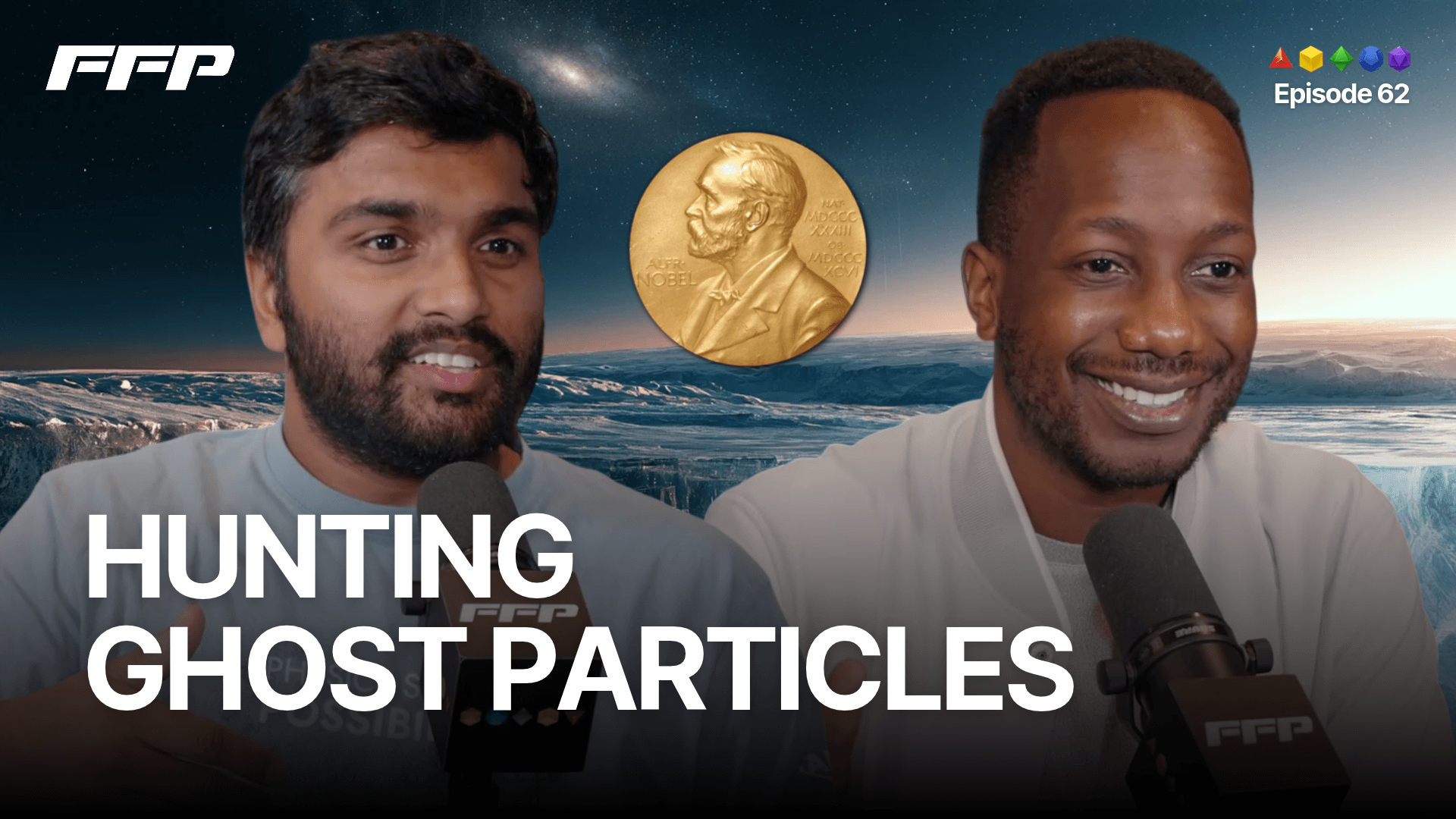
Francis Halzen led the IceCube collaboration, which grew from a conversation about Antarctic ice into a built observatory anchored by the University of Wisconsin. The project involves 450 scientists across 58 research institutions in 14 nations, cost about $280 million (mostly funded by the National Science Foundation over several decades), and is now being expanded into IceCube Gen2, a larger detector meant to catch more events and pin down neutrino energy and origin more precisely, including statistics on how many come from blazars versus other sources.
- 01
The hosts note this is the University of Wisconsin's 20th Nobel Prize affiliation across the sciences.
- 02
Halzen's award is also described as the first solo Physics Nobel since Georges Charpak in 1992.
375 words · auto-generated from the episode video
58:23So, Halzen, who is the Nobel Prize winner this year, Francis Halzen, he's been instrumental with IceCube. Okay, he helped carry the idea from a conversation about Antarctic ice into a fully built observatory. The University of Wisconsin is the main backing institution for IceCube. But IceCube is a massive, massive enterprise. It involves 450 scientists across 58 research institutions, across 14 different nations. It cost $280 million. A majority of that came from the National Science Foundation over several decades of work.
59:08And they're gonna be upgrading to IceCube gen two. Gen two. Which is gonna make an even bigger detector for even more frequent events and even more precise determination of energy and origin. This is University of Wisconsin's 20th Nobel Prize affiliation in the three sciences. So, they're on a roll. They're doing quite well. Maybe we'll put up our Nobel Prize top 10 power rankings. Yeah. So we know who's ballin'. Exactly. Because that's a lot. That's a lot, right? Yeah so these detectors, they're gonna be absolutely amazing. I am myself looking forward to IceCube gen two.
59:50Gen two's gonna be great. Because that's gonna collect even more events. It's gonna improve the source picture. It's gonna account for which objects actually produce it. We can get a statistics about, oh, this many blazars, this many this, this many that. It's gonna be really, really nice. I just, I really want to... As we end on this image, our curiosity as a species about the universe around us is so interesting and we continue to try to find ways to learn more and this is a very, very clever, somewhat non-intuitive unless you kind of have an understanding of the space way to think about it. It's in the ice, it's looking down, it's looking for this sort of secondary event.
1:00:35It's not a primary detection. These things that we're looking for that these neutrinos come from are still a mystery and certainly Nobel worthy. Again, solo Nobel, it's been a while. It's been a while. And they're not that frequent. And I know we've touched on this a couple times before anything with space for longtime listeners. You guys know this is one of my favorite things to discuss.