AstronomyNobel PrizePlanetary ScienceResearch FundingSpace MissionsScience Policy
Nobel season, the value of basic research, and the space missions to watch: Roman, Mars’ moons and Mercury. Plus a tour of FFP’s favorite episodes.
What science stories should be on your radar this fall? Lester and Krishna look ahead to Nobel Prize season, explore why curiosity-driven research matters, and unpack three space missions with big questions to answer. The Golden Goose Awards offer a starting point for a wider discussion about basic research and science funding: how can work that seems obscure today lead to discoveries nobody anticipated? We also take a tour of the FFP website and revisit some of our favorite episodes. Then we head into space. The Nancy Grace Roman Space Telescope opens a conversation about wide-field astronomy, gravitational microlensing, exoplanets and dark matter. JAXA’s Martian Moons eXploration (MMX) mission asks where Phobos and Deimos came from, while BepiColombo brings us to Mercury’s unusual interior, polar ice and magnetic environment. A recording note: the main conversation was recorded before Labor Day weekend. A newly recorded opening announcement addresses your requests for coverage of OpenAI, Navier–Stokes and the Millennium Prize problem. That deeper examination is being prepared separately; this episode is our science rundown. Have a question or a story you want us to cover? Send it our way. From First Principles is breaking down science news so it makes sense to curious people everywhere.
- EP 56
The Yak Mutation That Could Help Repair the Brain
A high-altitude genetic adaptation led researchers to a new neuron-to-glia signaling pathway that promotes myelin repair in preclinical models.
- EP 55
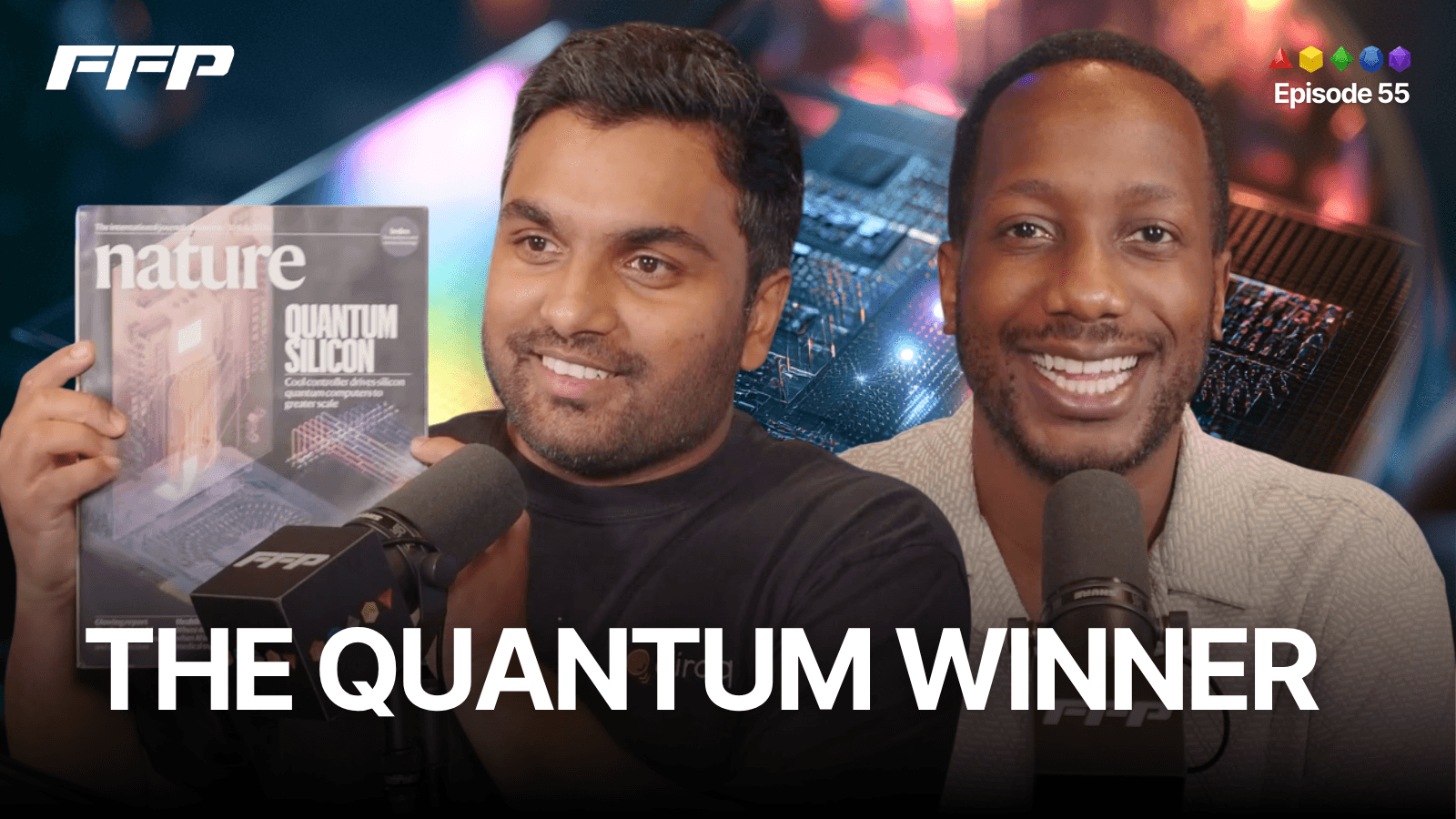
Why Spin Qubits Will Win the Quantum Race (Part 2)
Part II of our quantum computing deep dive compares the leading hardware architectures, and asks whether silicon’s greatest advantage is not simply making good qubits, but making quantum computers that can actually scale.
- EP 54
How Quantum Computing Actually Works (Part 1)
Part I of our quantum computing deep dive traces the field from Bell and Feynman to Deutsch and Shor—and explains what quantum computers actually do differently from classical machines.
- EP 53
What Claude Actually Did to the Riemann Hypothesis
Claude takes a real run at the Riemann Hypothesis, forcing us to ask what agentic AI can now do in mathematics, before we open the summer transfer window for America’s scientists.