
Closing reflections — understanding the true cause
Transcript
This chapter, from the episode video's captions · 1,695 words
1:18:10really famous disaster that happened in 2006 when >> it went to phase 1 trials of doing exactly this. This wasn't in the brain, but this was in the body. They were trying to stimulate CD28 to get the autoimmunity to go away and things like that. get the T-Rex to come back. Um, this was called the TGN412 disaster. Six patients. It resulted in cytoine release syndrome in all six volunteers, multiple organ failures because basically all the T- cells just got activated >> and then it didn't care that usually the T- cell is presented with some kind of antigen and then and then they act. This is they just like started acting
1:18:51>> and it was really bad, right? So we have to be very careful with messing with the immune system, right? And you could have something called specific antibodies like bicep specific antibodies where it targets not just CD28 but it also targets something that is very specific to microglea and you need both. It's an and not an or that like >> makes this thing >> yeah activate. >> Activate. >> Yep. >> Perhaps that's one way of doing it. You have brain penetrating vectors that go through the bloodb brain barrier. That's always like iffy though because now something's in my brain. I don't like the brain is >> if if if if that thing also matches in shape to some other random thing in my
1:19:31neurons then what's going to happen? So like trying to create translational therapies is one thing and that's that's its own like >> bag of yeah can of worms. Um but understanding the mechanism itself is the first step right the fundamental science needs to happen first before we start saying okay what part of this pathway can I poke >> we we have to figure first define the treasure map and then we can figure out the plan of how we're going to go get the treasure and now we have an interesting treasure map uh that is specific to issue that again also >> might have insights that are connected to other related >> topics. This is This is such a great
1:20:12piggyback off of our T-Rex episode. >> Yeah. Yeah. I think I think it's a it's it's a pretty good story, right? It's >> it it shows just how complicated the brain is, >> right? Right. Like like the brain is not just neurons. It's the blood vessels. It's immune cells. Those immune cells have been there since forever, since we were born. Right. All of these microglea are just hanging out in our brain and we're not getting any new ones. >> Right. Right. >> Because and they can't go through blood brain >> barrier. Right. Right. Because it stops at some point in that development. It's so good. >> This is this is so good. This so this this was a and and kudos to you know
1:20:52another multi-institution. >> Yes. >> Nature paper. >> Yeah. Multi-institution. Multi-ountry. >> Multi-country. Yeah. >> Um you know again with um Icon School of Medicine at Mount Si Maxplank Institute for Biology of Aging and the University of Cologne. I mean this is again people are working really hard like obviously we lose a lot of people to >> Alzheimer's every year it is a >> it's the next frontier >> it's the next frontier um it's going to be hugely impactful >> if we can sort of take this and continue to iterate to the point >> where hopefully we again we don't want to have another TN you know issue >> disaster but we have better tools now we
1:21:33have better understandings >> yeah and I think we [clears throat] learned a lot from that disaster on how to start phase one trials for immunology. Maybe we do a lot more testing >> in vitro, >> right, >> before going in vivo into a human at least, you know? >> But that the other thing with with this kind of stuff is it's incredibly hard to because this is such a unique sort of late stage evolution uh problem. And what I mean by that is a lot of these problems with Alzheimer's are is something that happens because the brain, the human brain is the most recent organ. to be to have evolved, right? A lot of the mutations that are different that
1:22:14make us different from the chimpanzees have to do with neuro development. I mean, ah, duh, right? But what that also means is the locations the location the part of our genome and the and the part of our brain that is so new also means there's a lot of stuff that can go wrong, right? Because it's kind of by design. We're still evolving this thing, >> right? All of a sudden, we kind of put evolution on pause because survival of the fittest isn't the same in the classical sense anymore. We're not having 20 kids and then the smartest ones like, you know, we're we're a completely different animal now where our the evolution that's happening in humans is now >> not something that is in Darwin's or
1:22:56origin of the species, but the genetics doesn't know that. >> Right. >> Right. Our our genome doesn't know that. And so the mutation rate is still really high and the the genome is still kind of experimenting with what the brain is doing, right? And and that's going to cause all of these failure mechanisms, right? >> So it's really hard to find, >> you know, you can't just with heart disease, you can you can sometimes even take a pig's heart, put it into a human, and it'll work, >> right? >> Can't do that with with the brain. >> Yeah. Right. >> Right. It's like >> that's actually a really good design. >> You know, it's it's it's because it's by design the most recent organ. It's going to have these failure modes that are
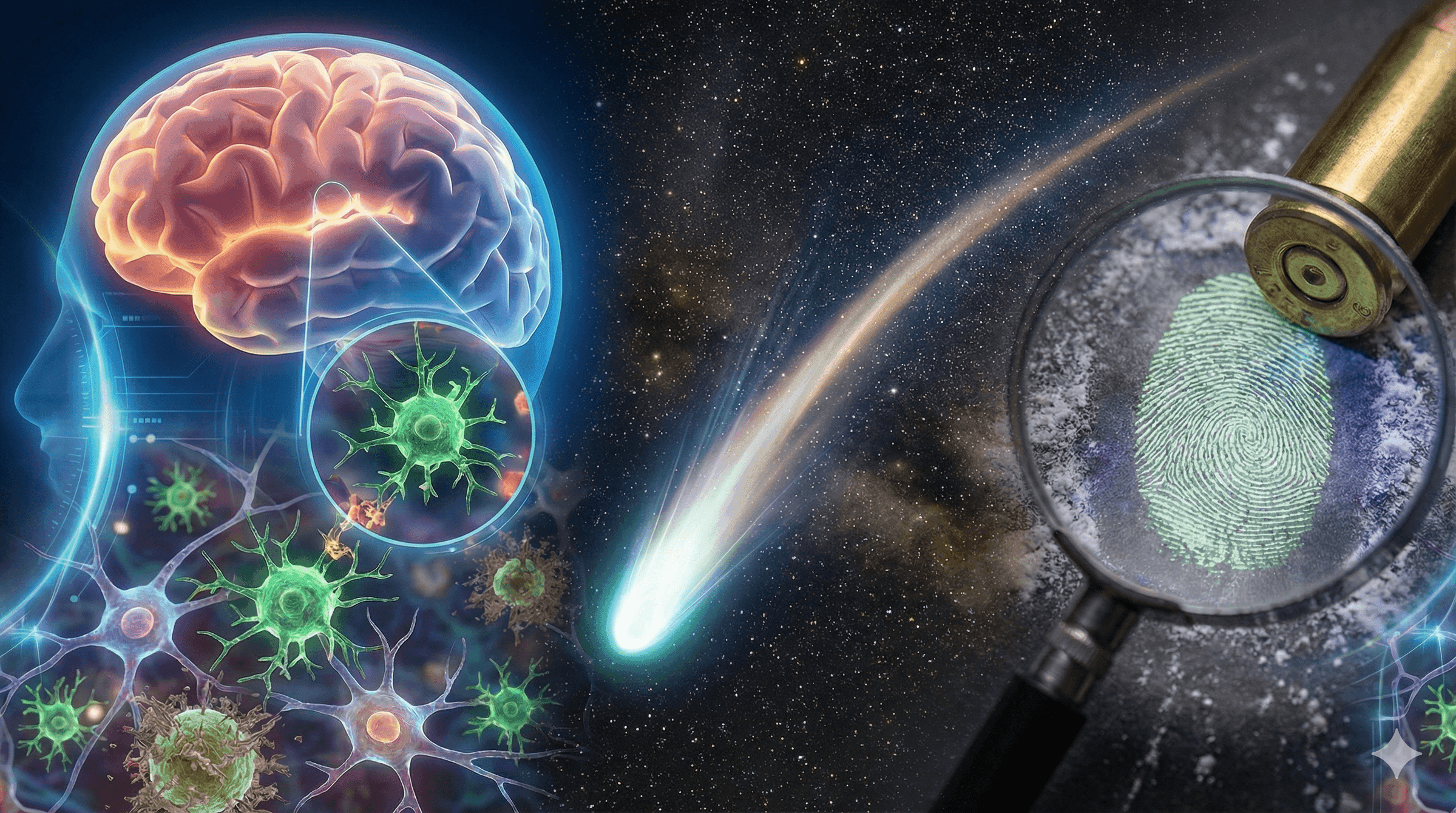
1:23:36just way more complicated than normal. >> God. So, and and also the accessibility problem. >> Yeah. >> Right. Like it's kind of hard to get in there. >> Yes. Yeah. >> As compared to the rest of the body. Um that's just another layer of complexity. Um three great stories this week. Um, we touched on uh a review of ThreeI Atlas uh which was the most demanded story. >> Yeah. Yeah. >> And it it is what >> I hope you're happy now. Another wicked reference. We got [laughter] two. >> And it it it is very similar to what we said in our original coverage of it. Yeah. >> It basically >> it's a weird comment. >> It's panned out exactly the way we described it the first time. What are
1:24:17the things that were going to be weird? What were the areas that still needed more information? We discussed about the why we would be able to get stuff on from the Mars orbiters, why it wouldn't be that good. >> Yeah, we we talked about >> we talked about >> even the guys were like, "Guys, you guys know it's not going to be that good, right?" [laughter] >> We we brought it up. This is months ago at this point. But again, good. Still so much to be learned. >> Yeah. >> We followed that up with the fingerprint story, which is so clever. >> Yeah, that's clever. >> That one is just clever. We can now pull fingerprints off of fired bullet casings. Uh, and it works retroactively. Old stuff does works for that, too. So, >> uh, >> at least 16 months.
1:24:58>> At least 16 months. >> And they I don't know. We haven't pushed it. >> We And they're going to push it. >> No, there are. Yeah, >> they're going to push it. Yeah. >> And then we finally ended with a great story about a better understanding of the different states uh that are helping us better understand how Al Alzheimer's sort of the process by which it begins and a potential pathway for us to think about therapeutics >> to try to address what is one of the most uh prevalent neurodeenerative diseases that we're seeing in the human population. Uh I'm ready for some good food. This week, >> uh, I'm gonna eat a lot. >> Thanksgiving is always, uh, you know,
1:25:40um, my birthday is the same week as Thanksgiving, and so it's always a little bit of, uh, uh, I have to be thankful when it's we're supposed to be celebrating me, >> right? [laughter] >> That's what like, why am I this week is supposed to be about me, but I get >> They should be thankful for you. >> Yeah, [laughter] that's exactly right. Um, but it'll be it'll be good. >> I'm excited to travel. >> You're gonna have a little time. >> Good time in Hawaii. >> That's going to be great. >> After three weeks of rain here or whatever it was, it'll be nice to get to some nice weather for a little bit. >> Um, as always, we really appreciate the listeners, especially those of you >> who get to the banter at the end,
1:26:21>> who reach us all the way here. Uh we are going to have a couple of more episodes through the end of the year and we may do some best of coverage for the end of year wrap-up. So if you're interested in us choosing our favorite stories from the year and doing like a huge summary kind of top 10 top five kind of video in the comments wherever you see this put we want >> if you made it this if you made it this far you know put some stuff in the comments. Yeah, >> give us ideas for the next month. >> Yeah, we we want to try to do something for the holidays. We think we want to do top 10 or a top best of kind of list to
From 3I/ATLAS Explained, Forensic Fingerprints & Alzheimer's Breakthrough
Interstellar object, forensic leap, and an Alzheimer's immune rethink.